Sunlight Is Like Weightlifting for Your Skin
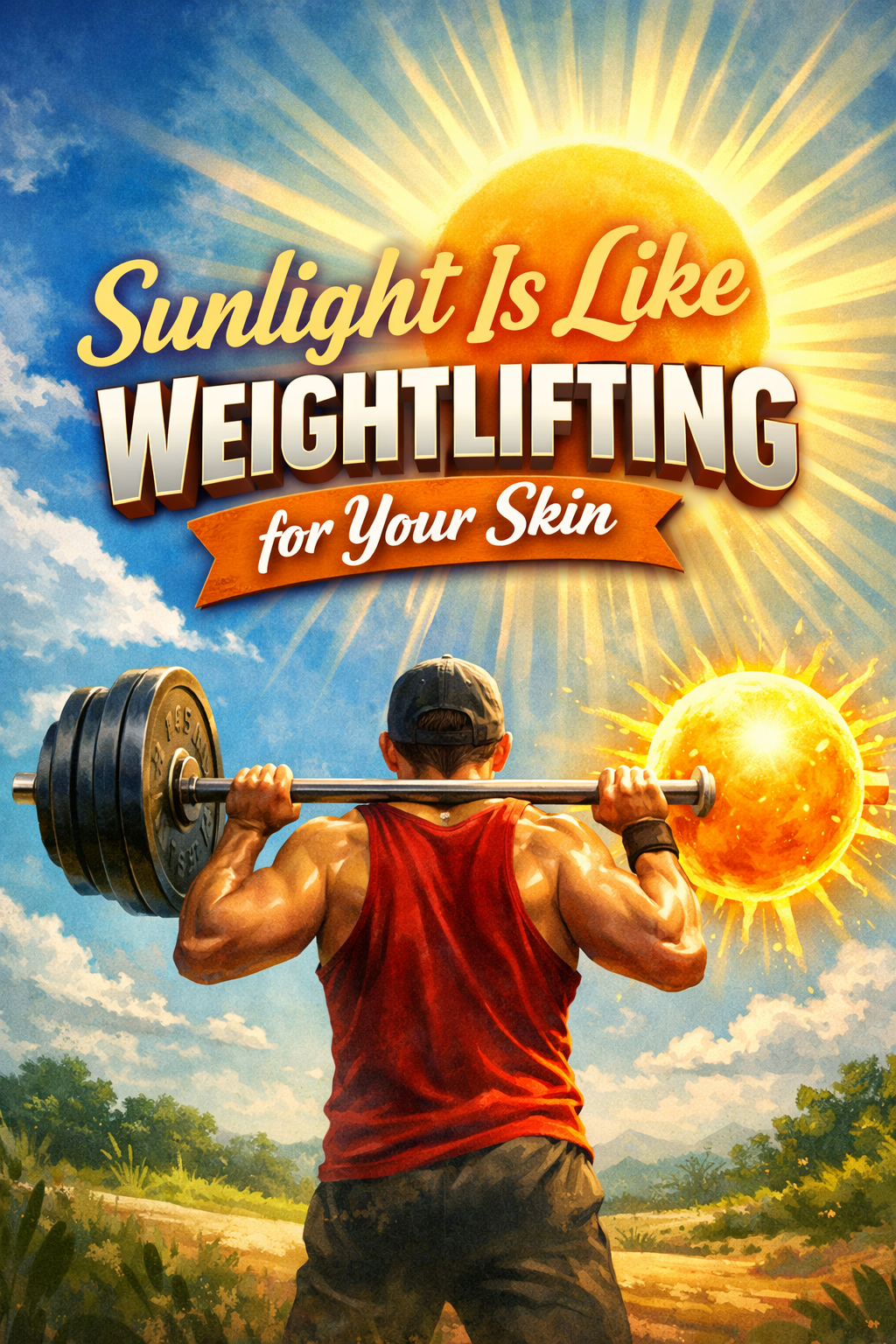
You need to both be smart about your sun exposure and your weightlifting
Sunlight Is Like Weightlifting for Your Skin
(Why Gradual Sun Exposure Is the Smart Way to Build Health)
Most people think about sunlight in one of two extreme ways.
Either:
“The sun is dangerous—avoid it at all costs.”
or
“The sun is natural—so more must be better.”
The truth, as usual, sits comfortably in the middle.
Sunlight is one of the most powerful health signals your body receives every day. It influences hormones, mood, sleep, heart health, immune function, and metabolism.
But here’s the part people often miss:
Sunlight works like strength training.
And if you treat it like a beginner who walks into a gym and immediately tries to bench press 100 pounds… things can go very wrong.
But the real problem wasn’t the weights.
The problem was how you approached them.
Weightlifting works because of progressive adaptation:
You start small.
Then your muscles adapt.
Then you slowly increase the load.
Sun exposure works exactly the same way.
Sunlight Is Not Just Light
Sunlight isn’t one thing.
It’s a full spectrum of energy, including:
Infrared light
Visible light
Ultraviolet light (UVA and UVB)
Each part of this spectrum triggers different processes in your body.
UVB – Vitamin D production
UVB light interacts with a cholesterol-like molecule in the skin to produce vitamin D3.
Your liver and kidneys then convert it into calcitriol, the active hormone form of vitamin D.
Calcitriol acts like a master conductor for your hormone system. It regulates genes that influence:
Testosterone
Estrogen
Thyroid hormones
Cortisol and stress hormones
Immune signaling
In other words:
Vitamin D is not just a vitamin.
It behaves like a hormone regulator for your entire endocrine system.
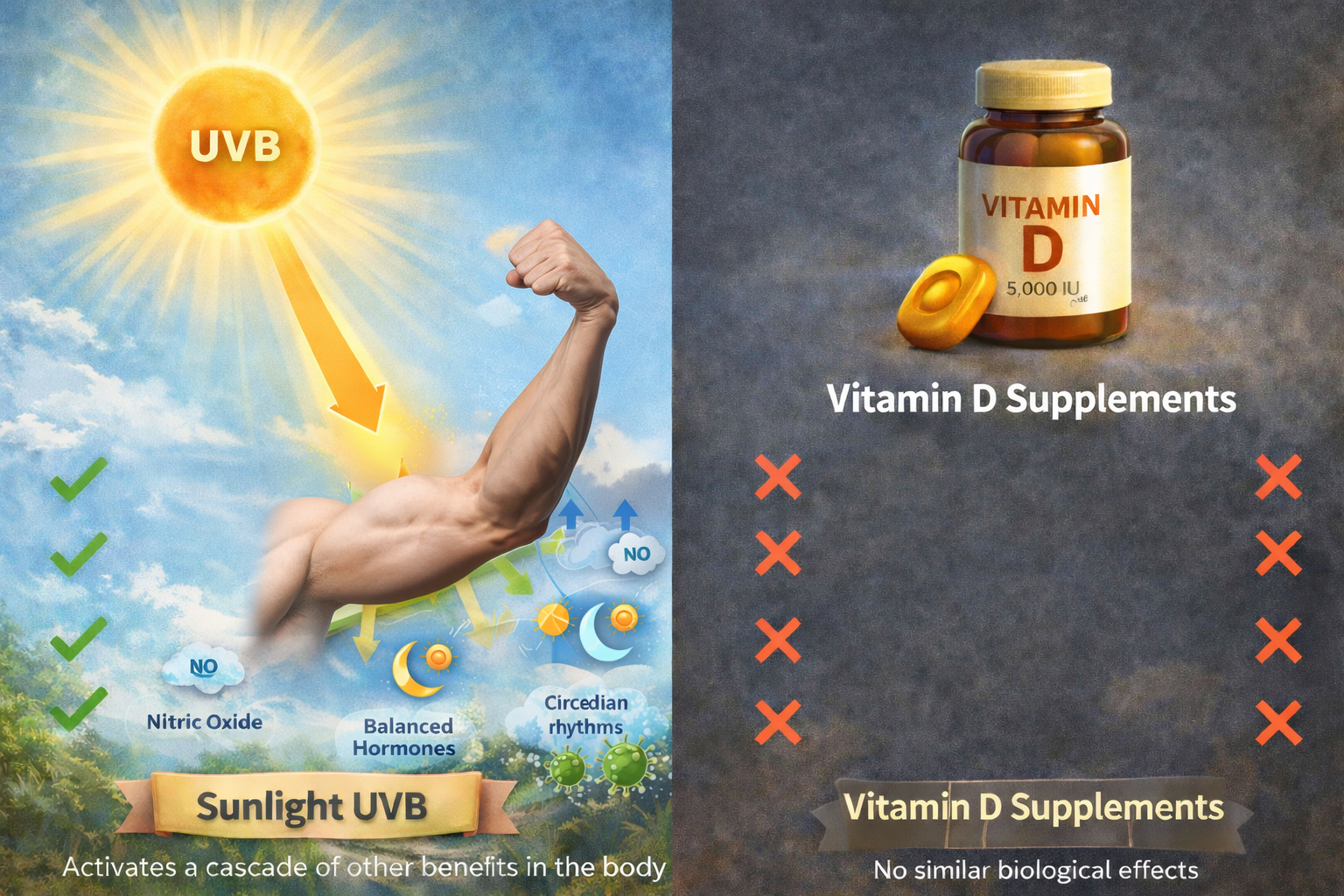
there is no strong evidence that swallowing vitamin D tablets reproduces the full spectrum of benefits that come from natural UVB exposure
One important detail that often gets overlooked is the difference between taking vitamin D in a pill and producing vitamin D naturally in the skin through sunlight. Blood tests measure a compound called 25-hydroxyvitamin D, which rises both when you take supplements and when UVB light triggers vitamin D production in your skin. Because the blood marker looks the same, it’s easy to assume the two sources are equivalent. However, sunlight exposure sets off a whole cascade of biological events in the skin beyond simply raising that number—triggering nitric oxide release, influencing immune signaling, and coordinating the timing of hormone and circadian rhythms. At the moment, there is no strong evidence that swallowing vitamin D tablets reproduces the full spectrum of benefits that come from natural UVB exposure, even though supplements can raise blood levels. This is one reason many researchers now view sensible sun exposure as a unique biological signal rather than just a delivery method for a single nutrient.
UVA – Blood pressure and circulation
UVA light penetrates deeper into the skin and triggers the release of nitric oxide.
Nitric oxide relaxes blood vessels and helps lower blood pressure.
Large epidemiological studies show that people with regular sun exposure often have lower cardiovascular risk and lower all-cause mortality compared with those who avoid the sun completely.
Visible light – Circadian rhythm
Morning sunlight signals your brain to regulate the circadian clock.
This improves:
Sleep quality
Energy levels
Hormone timing
Mental focus
Morning light is especially powerful because it resets the brain’s biological clock for the entire day.
Why Sunlight Improves Mood
Have you ever noticed that a sunny walk can completely change your mood?
That’s not just psychological.
Vitamin D directly increases activity of the enzyme tryptophan hydroxylase, which helps the brain produce serotonin, the neurotransmitter associated with calm focus and emotional stability.
People with healthy vitamin D levels from sunlight exposure consistently show:
Better serotonin signaling
Lower rates of seasonal depression
Improved mood stability
So that sunny walk might actually be doing more for your brain chemistry than another cup of coffee.
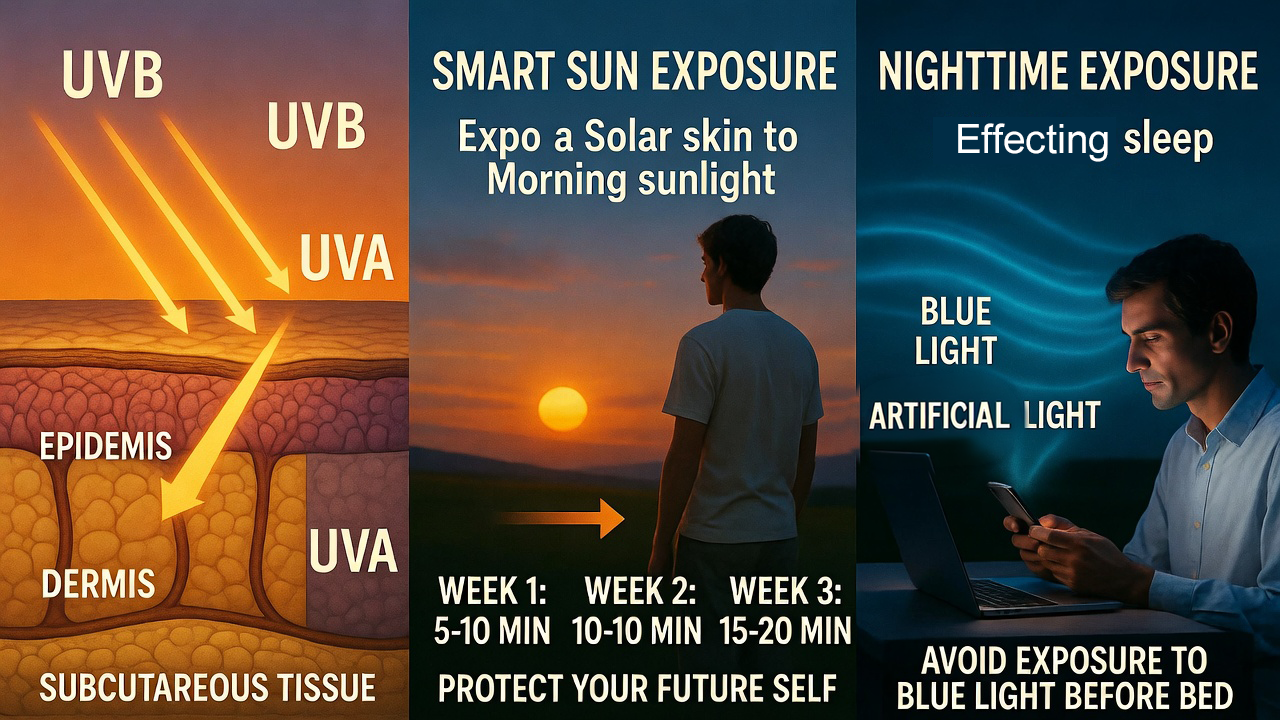
Keep all the aspects of light in mind
The Problem: Most People Skip the Training Phase
This is where the weightlifting analogy becomes important.
If you suddenly expose your skin to intense sunlight after months indoors, you can easily burn.
And burning matters.
Sunburn is a sign that the skin experienced too much UV stress too quickly, which increases skin damage and cancer risk.
But the problem isn’t sunlight itself.
It’s the lack of gradual adaptation.
The Solar Callus: Your Skin’s Natural Training Response
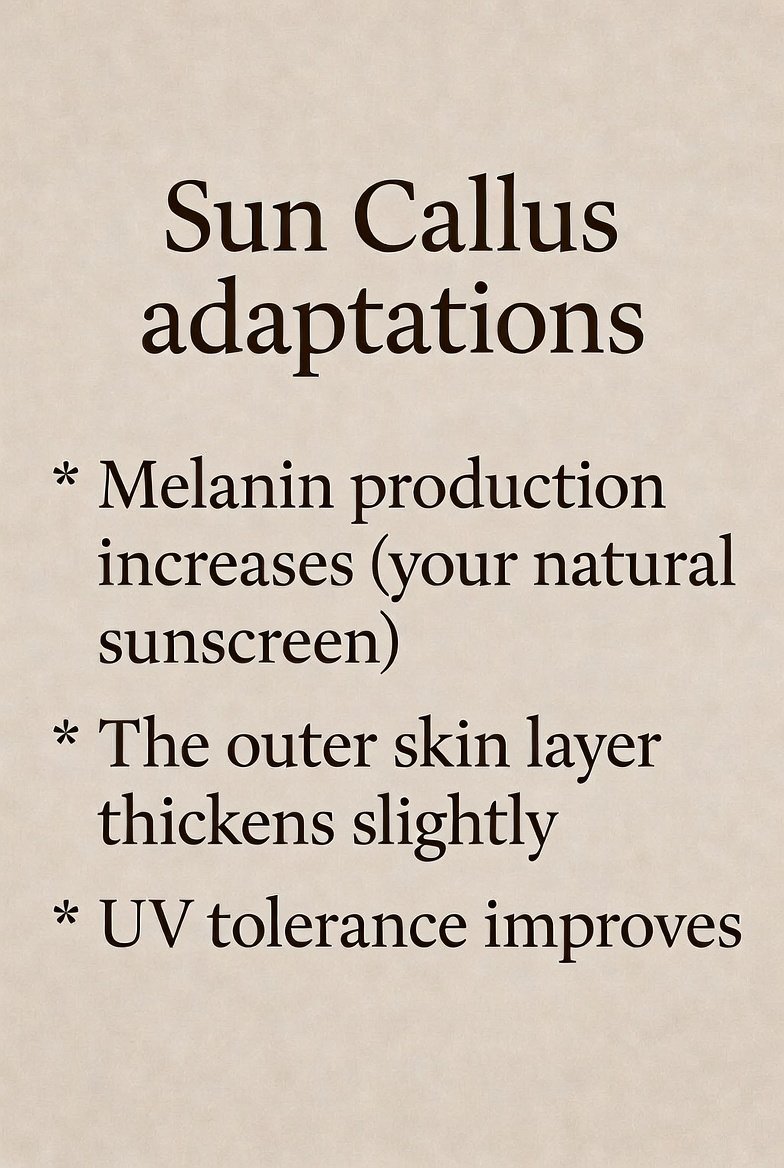
Gradually you can build a solar callus
Your body has a built-in way of adapting to sunlight when exposure happens gradually. This adaptive process is often referred to as a “solar callus.” The name can be a little misleading, because it doesn’t mean your skin becomes rough or thick like the calluses on your hands. Instead, it describes a series of subtle biological changes that help your skin become more resilient to sunlight over time.
When your skin receives small, repeated doses of sun, it begins to adjust in several ways. Melanin production increases, giving the skin more pigment that acts as a natural protective filter against ultraviolet radiation. At the same time, the outermost layer of the skin (the epidermis) thickens slightly, adding another level of protection. Together, these adaptations improve your skin’s tolerance to UV exposure, allowing you to absorb beneficial wavelengths—such as UVB for vitamin D production and UVA for nitric oxide release—while reducing the likelihood of burning.
This process is very similar to how the body adapts to physical training. Just as muscles become stronger through repeated, manageable stress, the skin becomes more capable of handling sunlight through gradual exposure. Short, consistent sessions allow the body to build resilience. Over time, this adaptation helps people enjoy many of the benefits of sunlight—such as improved vitamin D levels, better mood, hormone balance, cardiovascular support, and mitochondrial function—while minimizing risks like sunburn or excessive skin damage.
Turning Off the Inflammation Switch: The Role of Glycine
Of course, like exercise, sunlight creates a small amount of controlled stress in the body. This stress is actually part of how the benefits happen—triggering vitamin D production, improving circulation, and stimulating repair pathways in the skin and immune system. But just as with a hard workout, the body needs the right nutrients and recovery systems in place to resolve that stress properly. One of the lesser-known helpers in this recovery process is a simple amino acid that plays a surprisingly powerful role in turning inflammation back down once it has done its job.
Research shows that glycine can reduce the production of pro-inflammatory cytokines and modulate pathways such as NF-κB, one of the key molecular switches that activates inflammation. When glycine levels are sufficient, immune cells are less likely to overreact, helping the body shift from an inflammatory “attack mode” back toward repair and balance. This matters because many healthy processes—including exercise, sun exposure, and tissue repair—create short bursts of inflammation that need to resolve properly afterward. Glycine helps ensure that this cycle completes itself so the body can move from stress into recovery. In the context of sunlight, that means your skin and tissues are better able to repair and rebuild after UV exposure, allowing you to benefit from the positive effects of sunlight without getting stuck in a prolonged inflammatory response.
The Three Factors That Change Your Sun “Training Plan”
Just like lifting weights, your starting point matters.
Your ideal sunlight exposure depends on several factors.
1. Skin Tone
Melanin is your skin’s natural UV protection.
People with lighter skin produce less melanin and burn more easily.
People with darker skin have more built-in protection but may need longer sun exposure to produce the same vitamin D levels.
There is no universal exposure time that works for everyone.
2. Geography
Where you live dramatically affects UV intensity.
Someone in:
Northern Europe
Canada
Northern United States
may struggle to produce vitamin D during winter months because UVB levels are too low.
Meanwhile someone near the equator receives strong UV year-round.
Your environment changes the equation.
3. Your Current Sun Tolerance
If you’ve spent months indoors, your skin has lost much of its tolerance.
This is like taking a year off from the gym.
You start again with light exposure, not a maximum load.
How to Build Sun Tolerance Safely
The safest approach mirrors strength training principles.
Start small
Begin with about 5–10 minutes of morning sun on arms, face, or legs.
Morning sunlight is gentler and rich in infrared wavelengths that help prepare the skin.
Increase slowly
Add 2–5 minutes every few days as your skin adapts.
Stop before burning
The goal is adaptation, not redness.
If your skin begins turning pink, you’ve already reached the limit for that day.
Be consistent
Daily exposure works far better than occasional long exposures.
Think:
daily training instead of weekend warrior sessions.
What Mainstream Dermatology Says
It’s important to acknowledge that the idea of a “solar callus” is controversial.
Many dermatologists emphasize that any tanning represents a form of DNA stress response, and cumulative UV exposure increases skin cancer risk.
For that reason, organizations like the Skin Cancer Foundation recommend sun protection strategies such as:
Shade
Protective clothing
Sunscreen
However, emerging research also shows something interesting:
People who avoid the sun entirely often show higher rates of cardiovascular disease and overall mortality.
This suggests that sunlight may have systemic health benefits that outweigh the risks when exposure is moderate and non-burning.
The goal is not “maximum sun.”
The goal is intelligent exposure.
The Real Enemy Might Be Indoor Living
While sunlight has received most of the blame for decades, modern research increasingly points to another issue:
artificial light at night.
Phones, tablets, TVs, and LED lighting emit strong blue wavelengths.
This light:
Suppresses melatonin
Disrupts sleep cycles
Increases metabolic stress
Raises inflammation over time
In other words:
We often avoid sunlight during the day… and then blast our brains with artificial daylight at night.
That’s the opposite of what our biology expects.
The Big Picture
A balanced approach to light looks something like this:
Morning and daytime
Get 10–30 minutes of natural sunlight without burning.
This supports:
Vitamin D
Nitric oxide
Serotonin
Circadian rhythm
Midday
Use shade or clothing if exposure becomes intense.
Evening
Dim lights and reduce screen exposure so melatonin can rise naturally.
Final Thought
If someone told you that lifting weights was good for your health, you wouldn’t walk into the gym and try to bench press 100 pounds on your first day. You would start small, learn the movements, and gradually build strength over time. Sunlight deserves the same thoughtful approach. Begin with short exposures, let your skin adapt, and pay attention to the factors that make your situation unique—your skin tone, where you live, and how much tolerance your body has built for the sun. When you approach sunlight this way, it stops being something to fear and becomes what it has always been for humans: one of the most powerful natural tools for supporting health. 🌞