Lessons from Dr. Rhonda Patrick’s conversation with Dr. Dariush Mozaffarian
Listen to the podcast: The Hype vs. Data on Saturated Fat, Red Meat, & Seed Oils. In this FoundMyFitness episode, host Dr. Rhonda Patrick interviews Dr. Dariush Mozaffarian, a cardiologist and director of the Food is Medicine Institute at Tufts University.
You can also find the official episode page and show notes here.
Why Is This Important
If you grew up reaching for nonfat yogurt because you were told fat was bad for your heart, you are not alone. For decades, many of us were taught to judge food by a single number, especially saturated fat.
Dr. Mozaffarian has spent his career studying dietary fats. In this conversation, he argues that this single-nutrient focus can miss what actually matters. He says poor diet is a leading cause of poor health, yet most doctors receive almost no training in nutrition. His invitation is calmer than the diet wars make it sound: look at the whole food, what it replaces on your plate, and how heavily it has been processed.
For anyone trying to stay strong, steady, and well, that shift can take a lot of confusion off the table.
10 Points They Made
1. Judge the food, not just the saturated fat grams.
Dr. Mozaffarian is clear that LDL cholesterol is still an important risk factor for heart disease. He also says saturated fat, on average, can raise LDL. His point is that saturated fat does other things too. It can change triglycerides, HDL, and lipoprotein(a). There are many types of saturated fat, and the rest of the food can change how that fat behaves. He calls saturated fat “a distraction.” In his view, you can have a higher-saturated-fat diet that supports health, or a lower one that does not, depending on the foods you choose.
2. The same dairy fat can act differently in cream than in butter.
A European trial led by Ulf Risérus, which Dr. Mozaffarian described, gave people about 10% of their calories as unsweetened cream or as butter for eight weeks. The fats were similar, but the cream still had the milk fat globule membrane, a natural coating around milk-fat droplets that is mostly lost when butter is churned. In that study, LDL went up with butter and did not change with cream. He sees this as a reminder that the food’s structure, sometimes called the food matrix, can matter as much as the fat grams on the label.

3. The key question is, “Compared to what?”
Dr. Mozaffarian describes butter as a fairly neutral food against the average diet. If you swap butter for olive oil, canola oil, or soybean oil, he says the plant oil is the better choice. If you swap white bread, sugar, or sweets for a little butter, he says the butter may be the better choice. His practical advice: cook with plant oils as much as you can, and do not worry much about a little butter.
4. Whole-fat dairy without added sugar may not be worse than low-fat.
He says there is really no evidence that whole-fat dairy is worse than low-fat dairy for most health outcomes, and some evidence that the opposite may be true. He places fermented dairy, especially plain yogurt, then cheese and kefir, near the top of his animal-food list. He calls plain whole-fat yogurt “a wonderful health food.” The newest Dietary Guidelines, he notes, now say unsweetened whole-fat dairy is fine. If you prefer unsweetened oat or nut milk, he thinks those can be reasonable too.
5. Fresh red meat is not the same as processed meat.
Above animal foods, he puts minimally processed plant foods such as fruits, berries, nuts, and legumes. Within animal foods, he ranks unprocessed red meat, meaning fresh or frozen beef, pork, or lamb that spoils, below yogurt, cheese, milk, eggs, poultry, and butter. Processed meats sit at the bottom, including bacon, salami, sausage, and low-fat turkey deli meat. He says processed meats are strongly associated with stroke, diabetes, and cancer. For unprocessed red meat, his view is that one or two servings a week can fit in an otherwise healthy pattern, and that a serving a day is more than he would recommend. He attributes the concern mainly to compounds such as heme iron and substances formed when meat is burned or charred, not to the fat itself. In his view, a lean cut may not be much different from a fattier one.
6. He does not think seed oils deserve their bad reputation.
Dr. Mozaffarian says omega-6 fats from foods such as walnuts, pecans, peanuts, soybean oil, and canola oil have a large body of human research behind them. In his reading of that research, they can improve insulin-related measures and blood fats and have not been shown to raise inflammation in people. He thinks much of the fear comes from rodent studies and from confusing ordinary oils with the industrial trans fats that were later removed from food. If any oil is burned or reused again and again, he says that can be a problem, no matter which oil it is. At home, he often cooks with extra-virgin olive oil for the taste, and uses canola oil for frying because it is more stable in a hot pan. He also wants people to get more seafood omega-3s. Dr. Patrick noted that about 90% of Americans may not get enough omega-3 from seafood.
7. Ultra-processed foods may be a bigger problem than any one nutrient.
Dr. Mozaffarian says about 60% of calories in the U.S. food supply now come from ultra-processed foods. He traces part of that rise to low-fat product reformulation and to a period when major tobacco companies owned many food brands. He also points to the GRAS loophole, short for “generally recognized as safe.” In his telling, about 99% of food additives in the United States enter through that pathway, and many are never reviewed by the FDA. He defines ultra-processed foods as products made with additives and techniques you would not use in a home kitchen.
8. How a food is built can change how your body handles it.
When a food is broken down and put back together, he says, you can get what he calls a “triple hit”: nutrients may rush into the bloodstream more quickly, less starch may reach the gut bacteria that would normally use it, and your own body may absorb more of the calories. As an example, he compares Cheerios with steel-cut oats. Cheerios are a whole grain, but he says they are digested much faster. His simple label check for packaged carbohydrate foods: look for at least 1 gram of fiber for every 10 grams of carbohydrate. A food with 30 grams of carb would need at least 3 grams of fiber. A 5-to-1 or 4-to-1 ratio, he says, is even better.
9. Rising weight may not be only about willpower.
For the first two decades of the U.S. obesity rise, he points to a large increase in refined starch, about 300 calories per person per day. After 2000, he describes a paradox: calorie intake flattened or even fell a little, physical activity went up, and obesity kept rising. Newer research he cites suggests resting energy expenditure, the calories you burn while doing nothing, has dropped by about 220 calories a day in studies from the United States and England. He thinks changes in food quality, thermogenesis (the body’s heat production), and the gut microbiome may help explain this. In his view, a lot of the struggle people feel may be biological, not a failure of character.

10. Movement can help even when the scale does not.
Dr. Mozaffarian says exercise trials often do not produce much weight loss on their own. People may gain muscle, become metabolically healthier, and lose visceral fat, the fat around the organs, even if overall weight barely changes. That is an encouraging message if you already practice chair yoga or other regular movement. He also notes that GLP-1 weight-loss medicines are approved as an addition to nutrition and lifestyle, not a replacement for them. In the real world, he says, only about 20 to 40% of people are still on the drug at one year, and without changes in food and lifestyle, weight often returns, sometimes with less muscle and bone than before.
5 Key Takeaways
- Look at the whole food and the overall pattern, not a single nutrient such as saturated fat.
- Minimally processed plants, unsweetened fermented dairy, seafood, and plant oils are the foods Dr. Mozaffarian leans toward most.
- Fresh red meat in modest amounts is not the same, in his view, as processed deli meats, bacon, or sausage.
- Ultra-processed foods and refined starches may do more to shape health and weight than fat grams alone.
- Healthy eating and regular movement can support metabolic health even when the number on the scale barely budges.
Try This This Week
- Cook with olive oil, avocado oil, or canola oil most of the time. A little butter is fine if you enjoy it.
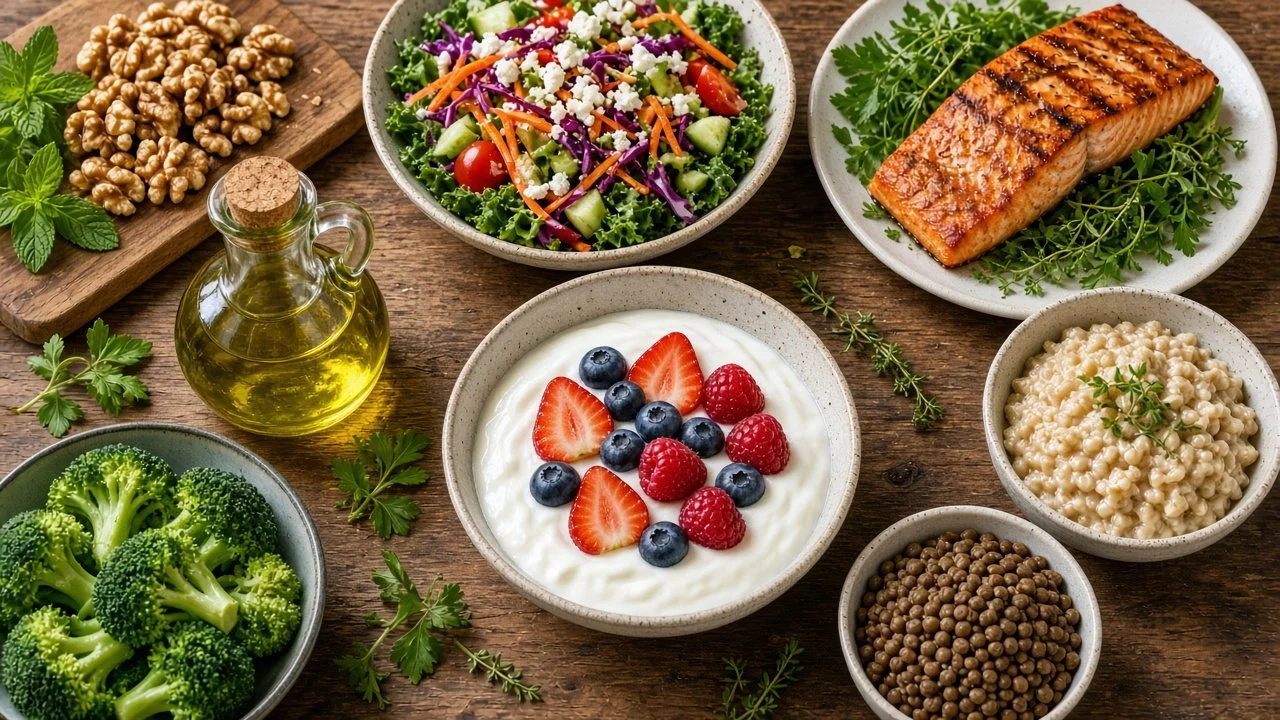
- Choose plain, unsweetened yogurt, whole-fat if you like it. Add berries instead of buying a sweetened cup.
- When you pick a cereal, bread, or energy bar, check the label for at least 1 gram of fiber for every 10 grams of carbohydrate.
- Swap one ultra-processed item for something closer to a real food, such as steel-cut oats instead of a highly processed cereal.
- If you have red meat, keep it to a modest portion, skip the charred or blackened bits, and put something green on the plate, such as broccoli, cabbage, or fresh herbs.
- Leave the packaged deli meats in the case this week. Use leftover roasted chicken or a simple egg instead.
- Keep showing up for your movement practice, even if the scale does not move. Building strength and losing visceral fat still count.
This post is a summary of the speakers’ views from the episode. It is not personal medical advice. If you have a health condition, or questions about dairy, meat, oils, or a medication such as a GLP-1 drug, talk with your clinician about what fits your situation.