The Drivers of Metabolic Syndrome — and How to Prevent Each One
Educational feature, not medical advice. Diagnosis and treatment belong with a clinician who knows your history and labs.
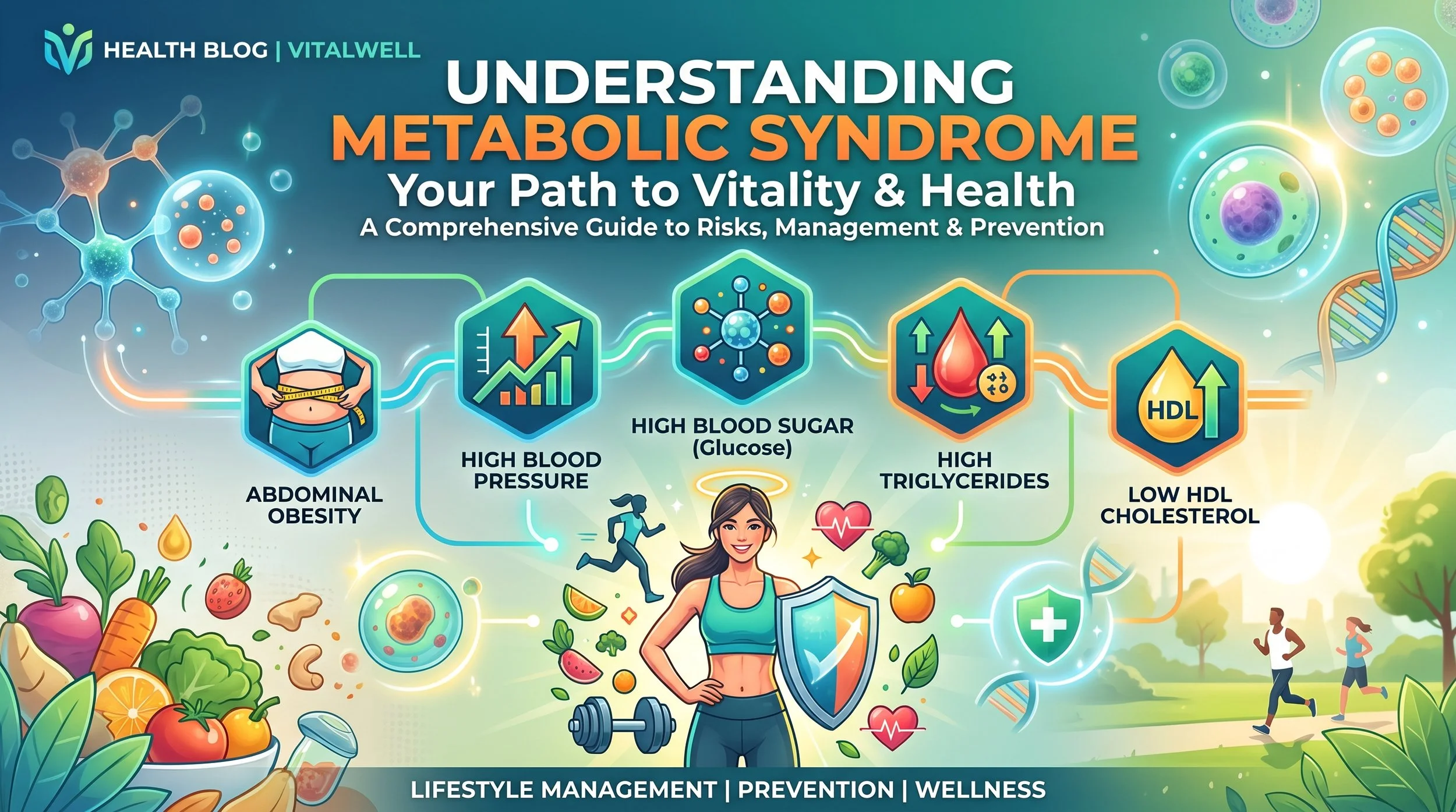
Metabolic syndrome is not one disease. It is a cluster of five problems that travel together: a large waist, high triglycerides, low HDL cholesterol, high blood pressure, and high fasting blood sugar.
Meet any three, and the diagnosis is on the table. That cluster roughly doubles the risk of atherosclerotic heart disease and raises the risk of type 2 diabetes about fivefold compared with people who do not have it.
The good news is blunt. Most of the drivers are modifiable. The prevention list looks long only until you notice it is mostly the same work, repeated.
What the diagnosis actually requires
U.S. clinics most often use a harmonized definition from the American Heart Association, the National Heart, Lung, and Blood Institute, and the International Diabetes Federation. You need three of these five:
Waist circumference: more than 40 inches in most U.S. men, more than 35 inches in most U.S. women. People of Asian ancestry often develop risk at smaller waists (commonly 35 inches in men and 31–32 inches in women). Location of fat matters more than the bathroom scale.
Triglycerides: 150 mg/dL or higher, or treatment for high triglycerides.
HDL cholesterol: under 40 mg/dL in men or under 50 mg/dL in women, or treatment for low HDL.
Blood pressure: 130/85 mm Hg or higher, or blood-pressure medication in someone with a history of hypertension. Many clinics now flag 130/80 under current hypertension guidelines.
Fasting glucose: 100 mg/dL or higher, or medication for high blood sugar.
Two out of five is still a warning. Each extra component adds risk. In 2023 the American Heart Association folded this cluster into a larger idea called cardiovascular-kidney-metabolic (CKM) syndrome: obesity, diabetes, kidney disease, and heart disease are not separate silos.
U.S. cardiometabolic health has been getting worse, not better. In NHANES data through 2017–2018, only 6.8% of American adults had optimal cardiometabolic health. Adiposity and blood sugar were the pieces that deteriorated most.
Why the five problems show up together
The biology is a loop.
Fat around the organs — visceral fat — releases free fatty acids and inflammatory signals. Muscle and liver stop responding well to insulin. The liver then overproduces glucose and triglyceride-rich particles. HDL falls. High insulin makes the kidneys hold salt and turns up sympathetic tone, so blood pressure rises.
That loop is sped up by ultra-processed food, sitting-heavy days, short or broken sleep, night-shift schedules, smoking, extra alcohol, some medications, and genes you did not choose. Urbanization explains why prevalence has climbed worldwide even though human DNA has not suddenly changed.
The drivers — and the prevention that matches each one
1. Visceral fat (the waist)
Why it matters. Abdominal fat, especially fat around the organs, is the strongest clinical marker of the cluster. It is metabolically louder than fat under the skin. It feeds liver fat, insulin resistance, and inflammation. High-calorie intake is the main reason visceral fat accumulates.
What to do. Modest, kept-off weight loss is the highest-yield single move. Losing about 3–5% of body weight can improve insulin sensitivity, triglycerides, and blood pressure. The CDC National Diabetes Prevention Program uses 5–7% as the target that cut type 2 diabetes risk by about 58% in the original trial — and by 71% in people over 60. Seven to 10% is the usual target to reduce liver inflammation in metabolic dysfunction–associated steatotic liver disease (MASLD).
Pair a deficit you can live with — often 500–750 calories a day below maintenance — with strength training so you lose fat, not muscle. Measure the waist at home. Anti-obesity medications and metabolic surgery are legitimate next steps when lifestyle is not enough and a clinician agrees.
2. Insulin resistance
Why it matters. Cells in muscle, liver, and fat stop responding properly to insulin. Glucose stays in the blood. The pancreas compensates with more insulin. High insulin then worsens salt retention, nervous-system drive, and fat storage. Inactivity, visceral fat, sleep loss, refined starch, sugary drinks, some drugs, and family history all feed this.
What to do. Two behaviors restore insulin sensitivity faster than almost anything else: shrinking visceral fat and working large muscle groups. Aerobic activity plus resistance training both help. A 10–15 minute walk after meals blunts the glucose rise. Sleep 7–9 hours when you can. Limit sugar-sweetened drinks and refined grains. If you already sit in the prediabetes range, a structured program modeled on the Diabetes Prevention Program is first-line. Metformin is sometimes added by a clinician. It is an adjunct, not a substitute.
3. Sitting and low activity
Why it matters. Skeletal muscle is the body’s largest insulin-responsive tissue. Unused muscle clears glucose poorly. Inactivity tracks with higher triglycerides, lower HDL, higher blood pressure, and insulin resistance — even before a large weight gain.
What to do. Aim for at least 150 minutes a week of moderate activity (brisk walking counts) or 75 minutes of vigorous activity, plus strength work on two or more days. That matches CDC and American Heart Association guidance. Stand or walk every 30–60 minutes. A practical clinic starter is 5,000 steps a day, building toward 7,000–10,000. Combined diet-plus-exercise programs outperform either alone for reversing the syndrome. Movement still helps when the scale barely moves.
4. An ultra-processed, high-sugar way of eating
Why it matters. Diet is a calorie problem and a quality problem. Patterns heavy in ultra-processed foods, liquid fructose (soda and many juices), refined starch, sodium, and industrial fats promote overeating, liver fat, insulin resistance, and a less healthy gut microbiome. An umbrella review in The BMJ linked higher ultra-processed food intake to higher risks of type 2 diabetes, obesity, and cardiovascular death. Fructose that arrives without fiber is especially good at becoming liver fat.
What to do. Default to a Mediterranean-style plate or DASH. That means vegetables, fruit, legumes, nuts, olive oil, fish, modest dairy, whole grains, and limited red meat, processed meat, sodium, and added sugar.
In the PREDIMED trial, Mediterranean diets with extra-virgin olive oil or nuts made metabolic syndrome more likely to remit than a low-fat control, even without a weight-loss mandate. PREDIMED-Plus later showed that a calorie-reduced Mediterranean diet plus activity and coaching cut new type 2 diabetes by about 31% versus Mediterranean advice alone in older adults who already had overweight and metabolic syndrome. DASH trials consistently lower waist, blood pressure, and triglycerides.
Two deletions do a lot of the work: sugar-sweetened drinks and ultra-processed snacks.
5. Age
Why it matters. Risk rises with the years. Muscle and mitochondria decline. Visceral fat tends to increase. Vessels stiffen. Decades of diet, sitting, and short sleep accumulate. Some estimates put U.S. prevalence above 40% after age 60.
What to do. You cannot change your birth year. You can change the slope. Strength training after 40 is how you defend muscle, and muscle is how you defend insulin sensitivity. Screen waist, blood pressure, lipids, and glucose or HbA1c more often with age, not less. PREDIMED-Plus enrolled people 55–75. The package still works.
6. Genes, family history, and ancestry
Why it matters. A family history of type 2 diabetes or early heart disease raises risk. Variants in genes such as TCF7L2, FTO, PPARG, and APOC3 nudge susceptibility. In the United States, Hispanic adults have among the highest rates of metabolic syndrome. Many people of South Asian and East Asian ancestry develop insulin resistance at a lower BMI and a smaller waist.
What to do. Use ancestry-appropriate waist cutoffs. If your parents or siblings had early diabetes or heart disease, treat waist, fitness, and food quality as earlier problems than population averages suggest. Do not wait for a BMI of 30 if you already carry a large waist or a rising triglyceride-to-HDL ratio.
7. Short sleep and sleep apnea
Why it matters. Habitual short sleep predicts more metabolic syndrome and more type 2 diabetes. Lost sleep raises evening cortisol and adrenaline, lowers insulin sensitivity, and increases hunger. Obstructive sleep apnea adds oxygen drops and dozens of micro-arousals an hour. When CPAP is withdrawn in experiments, free fatty acids, glucose, and cortisol rise during the night. Apnea is linked to insulin resistance and diabetes even after you account for body weight.
What to do. Protect a consistent 7–9 hour sleep opportunity. Keep bedtime and wake time stable. Make the room dark, cool, and quiet. Cut late caffeine and heavy late meals. If you snore loudly, gasp, have resistant high blood pressure, or fall asleep when you should not, ask about a sleep study. Treating apnea treats a metabolic driver, not just a snoring complaint. Weight loss often improves apnea and closes the loop.
8. Night shifts and body-clock disruption
Why it matters. Being awake and eating at biological night impairs glucose tolerance. Long-term night work is tied to more hypertension, diabetes, and heart disease. Late chronotypes show more circadian misalignment and higher metabolic-syndrome risk. Eight hours of sleep on the wrong schedule is still a metabolic hit.
What to do. Put the largest meals in daylight when the job allows. Early time-restricted eating — finishing food 8–10 hours after the first bite, with the window earlier rather than later — has improved glucose and lipids in small trials. Shift workers should lock a designated sleep block, use bright light on the night shift, and avoid a large high-sugar meal at 3 a.m. when they can.
9. Chronic stress
Why it matters. A body stuck in fight-or-flight keeps cortisol and catecholamines high. That pattern favors abdominal fat, higher glucose, lower HDL, and higher blood pressure. Sleep apnea is itself a nighttime stressor, so stress and sleep often travel together.
What to do. Treat stress like a vital sign. Regular aerobic exercise is both a metabolic tool and a stress tool. Sleep is the other non-negotiable. Slow breathing, mindfulness programs, and cognitive behavioral therapy have evidence when anxiety or depression is part of the picture. If the source is a schedule, a caregiving load, or untreated depression, the intervention may be structural rather than an app.
10. Smoking
Why it matters. Tobacco worsens insulin resistance, inflames blood-vessel lining, lowers HDL, and raises blood pressure. It also drives the heart attacks and strokes that make metabolic syndrome worth diagnosing in the first place.
What to do. Do not start. If you smoke, quitting is first-line heart and metabolic therapy. Combination nicotine replacement, varenicline, bupropion, and counseling all have evidence. Weight gain after quitting is common and manageable. It does not cancel the cardiovascular benefit.
11. Extra alcohol
Why it matters. Excess alcohol raises triglycerides, adds empty calories, lifts blood pressure, fragments sleep, and can accelerate fatty liver. “Moderate drinking” is not a treatment for metabolic syndrome. Any small HDL bump is not a reason to start.
What to do. If you do not drink, do not start for metabolic health. If you do, stay low — and go to zero during a triglyceride-lowering or weight-loss phase. People with fatty liver, high triglycerides, high blood pressure, or sleep apnea often do better with abstinence. Recheck fasting triglycerides after four weeks without alcohol. The change is frequently large.
12. A disrupted gut microbiome
Why it matters. A low-fiber, ultra-processed pattern can reduce microbial diversity, weaken the gut barrier, and let bacterial products into the bloodstream. That signal feeds liver inflammation and insulin resistance. The microbiome is not the sole cause of metabolic syndrome. It is a plausible amplifier.
What to do. Feed the microbes you want. Vegetables, fruit, legumes, nuts, and intact grains supply fermentable fiber. Fermented foods can increase diversity in feeding studies. Probiotic capsules are not a substitute for changing the default plate.
13. Low-grade inflammation
Why it matters. Visceral fat and an overfed gut keep a low fire of cytokines burning. Inflammation blunts insulin signaling and damages endothelium. Smoking, fructose overload, and untreated apnea add fuel.
What to do. Do not treat “inflammation” with a supplement stack. Remove the sources: visceral fat, ultra-processed diets, smoke, untreated apnea, and inactivity. Mediterranean and DASH patterns lower C-reactive protein in trials. High-dose antioxidant vitamins have not earned a prevention indication here.
14. PCOS, fatty liver, and gestational diabetes
Why they matter. Polycystic ovary syndrome is a metabolic disease as well as a reproductive one. Intrinsic insulin resistance, worsened by obesity, drives high androgens and a high lifetime rate of blood-sugar and lipid problems. Gestational diabetes marks a woman — and often her child — for later metabolic syndrome. MASLD, the current name for what many people still call fatty liver, is the same biology in the liver. Liver fat then worsens whole-body insulin resistance.
What to do. Women with PCOS need glucose, lipid, blood-pressure, and sleep-apnea screening, not only cycle management. After gestational diabetes, get postpartum glucose testing and enter a prevention program. The risk does not vanish when the pregnancy ends. For MASLD, 3–5% weight loss reduces liver fat; 7–10% is the usual target for inflammation. Limit sugary drinks and alcohol.
15. Certain medications
Why they matter. Corticosteroids, some antipsychotics (especially olanzapine and clozapine), some HIV medicines, and some older blood-pressure drugs can promote weight gain, insulin resistance, or dyslipidemia. The underlying condition still has to be treated.
What to do. At every medication review, ask whether a metabolically lighter option still treats the primary problem. If a costly drug is required, intensify food, walking, and sleep on day one rather than waiting for a 20-pound gain. Never stop a prescribed medicine because of a blog post.
16. Too much sodium, not enough potassium
Why it matters. High blood pressure is one of the five diagnostic pillars. High insulin already makes the kidney hold salt. A high-salt, low-potassium diet then lands on that kidney. The 2019 ACC/AHA prevention guideline estimated about 5–6 mm Hg less systolic pressure from cutting sodium in people with hypertension.
What to do. DASH was built for this driver. If your sodium intake is high, cut at least 1,000 mg a day; many adults do well closer to 1,500–2,300 mg. Get potassium from food — produce, beans, yogurt, potatoes — not from pills unless a clinician prescribes them. About 1 kilogram of weight loss predicts about 1 mm Hg less systolic pressure. Alcohol reduction and walking add independent millimeters.
17. High triglycerides and low HDL
Why it matters. This lipid pattern is both a diagnostic criterion and a product of insulin resistance plus sugar, alcohol, and refined starch. The liver overproduces VLDL. HDL falls. Small, dense LDL particles form and enter artery walls more easily.
What to do. Triglycerides respond unusually well to lifestyle: lose visceral fat, cut alcohol, cut sugary drinks, swap refined starch for fiber and unsaturated fat, and add aerobic exercise. Prescription omega-3 agents are used for very high triglycerides. Statins remain first-line when LDL or overall heart risk is high. Drugs that only raise HDL have not reduced heart attacks. Raise HDL by moving more and shrinking the waist.
18. The modern environment
Why it matters. Cheap calories, sitting jobs, short sleep, and ultra-processed food aisles are the population engine. Individual willpower is a weak instrument against a strong default.
What to do. Keep ultra-processed snacks out of the house. That single friction change outperforms most nutrition knowledge. Walk the first and last mile of a commute when it is safe. If you manage a workplace, protect meal timing for shift workers and offer a Diabetes Prevention Program–style course. Policy tools — school meals, sugary-drink taxes, front-of-pack labels — shift intake at the population level. None of that removes personal agency. It stops pretending agency is the only variable.
What the trials say when you stack the levers
The literature is consistent on one point: multimodal beats single-mode.
A 2025 network meta-analysis found that a moderate-macronutrient diet (calorie-restricted, DASH, or Mediterranean) plus aerobic training or professional activity counseling was the most effective package for reversing metabolic syndrome. Coaching was not fluff. Behavior-change techniques explained part of the difference in weight and blood pressure between studies.
The Diabetes Prevention Program remains the landmark for the glucose arm: about 7% weight loss plus 150 minutes of activity a week cut diabetes incidence by 58%. PREDIMED showed a Mediterranean pattern can remit the syndrome even without mandated weight loss. PREDIMED-Plus showed that adding a calorie deficit, structured activity, and coaching prevents about three extra diabetes cases per 100 high-risk older adults relative to Mediterranean advice alone.
None of those trials required a perfect diet. They required a better default, practiced for years.
If 18 items is too many, do these six
Measure the waist and the morning blood pressure. You cannot manage what you do not track.
If you carry extra visceral fat, aim for a 5–10% weight loss you can keep. Recheck at 12 weeks.
Walk most days. Lift twice a week. Treat sitting as a behavior, not a furniture arrangement.
Eat a Mediterranean or DASH-style pattern. Delete soda and ultra-processed snacks first.
Sleep 7–9 hours on a stable schedule. Get evaluated for apnea if you snore, gasp, or have resistant high blood pressure.
Do not smoke. Keep alcohol low or at zero. Review metabolically costly medications with the person who prescribed them.
Medications — blood-pressure drugs, statins, metformin, GLP-1 receptor agonists, SGLT2 inhibitors, and others — are appropriate when lifestyle is not enough or when heart or kidney risk is already high. They are tools, not a moral verdict. NHLBI, the American Heart Association, and Mayo Clinic all describe lifestyle as first-line and drugs as the next line for the numbers that stay off target.
When to call a clinician rather than “wait and see”
Waist above the cutoff for your sex and ancestry, plus any second feature.
Fasting glucose at or above 100 mg/dL, or an HbA1c in the prediabetes or diabetes range.
Blood pressure repeatedly at or above 130/80 mm Hg.
Triglycerides at or above 500 mg/dL, or LDL high enough that 10-year or lifetime heart risk is elevated.
Loud snoring, witnessed pauses in breathing, or sleepiness while driving.
A history of gestational diabetes, PCOS, fatty liver, or a first-degree relative with early heart disease or type 2 diabetes.
Ask specifically for waist circumference, a fasting lipid panel, fasting glucose or HbA1c, blood pressure averaged over more than one visit, and — when the story fits — a sleep study and a look at the liver. The five-factor checklist is cheap. Missing it is expensive.
The honest bottom line
Metabolic syndrome is what happens when human metabolism lives in cheap calories, low movement, short sleep, and chronic stress — on top of genes and conditions some people did not choose.
The drivers are many. The prevention is not mysterious: less visceral fat, more muscle work, better food quality, better sleep, no smoke, little alcohol, treated apnea, and medication when the numbers or the risk demand it.
That work is not glamorous. The trials already ran. The remaining task is to practice the package long enough for waist, blood pressure, triglycerides, HDL, and glucose to come apart as a cluster. That is what prevention looks like when it is working.
Sources
Key clinical pages and studies behind this piece:
CDC — Prediabetes and the National Diabetes Prevention Program
Diabetes Prevention Program, New England Journal of Medicine (2002)
PREDIMED Mediterranean-diet trial, New England Journal of Medicine
BMJ umbrella review — ultra-processed food and health outcomes
2019 ACC/AHA Guideline on the Primary Prevention of Cardiovascular Disease
AHA presidential advisory on cardiovascular-kidney-metabolic health (2023)
AHA scientific statement on population approaches to diet, activity, and smoking
Additional support came from reviews on sleep and circadian disruption, PCOS as a metabolic disease, MASLD, gut microbiome and ultra-processed foods, DASH and Mediterranean-diet meta-analyses, and a 2025 network meta-analysis showing multimodal diet-plus-activity programs outperform diet or exercise alone.