The Athlete's Heart Paradox: How Extreme Fitness Can Both Protect and Challenge Your Cardiovascular Health
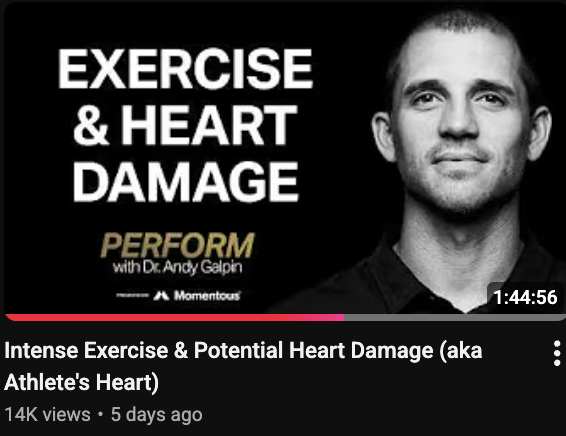
This article is pulled from an Andy Galpin video.
Opening: The Legend of the White Horse
In the rugged Copper Canyon of Mexico's Sierra Madre, a mysterious figure known as Caballo Blanco ("White Horse")—real name Micah True—ran 150–170 miles per week for nearly two decades with no fancy shoes, nutrition plans, or medical support. He inspired the bestselling book Born to Run and became a legend in ultramarathon circles. Yet at age 58, he died during a routine 12-mile jog, likely from a cardiac event such as left ventricular cardiomyopathy.
This story highlights a profound paradox in exercise science: the same intense training that builds extraordinary cardiovascular fitness can sometimes mimic or mask serious heart conditions. Dr. Andy Galpin explores this in his Perform podcast episode on "Athlete's Heart," blending history, physiology, and practical advice.
Whether you're a weekend warrior, endurance athlete, or serious competitor, understanding "athlete's heart" (more precisely, exercise-induced cardiac remodeling or EICR) empowers you to train hard while protecting your long-term health.
Body: What Is Athlete's Heart and Why Does It Matter?
Athlete's heart refers to adaptive changes in the heart from chronic endurance training: enlarged chambers (especially the left ventricle), increased wall thickness (hypertrophy), higher stroke volume, and lower resting heart rate (bradycardia). These changes enhance oxygen delivery and performance but can resemble pathological conditions like hypertrophic cardiomyopathy (HCM) on imaging.
Historical Context and Physiology Basics
The concept dates back to 1899 with observations of enlarged hearts in cross-country skiers. Early confusion arose—were these changes congenital advantages or training effects? Pioneers like Paul Dudley White helped establish that lower resting heart rates in athletes are often benign adaptations, not disease.
The heart has four chambers: right and left atria (upper) and ventricles (lower). The powerful left ventricle pumps oxygenated blood to the body. Endurance training stresses this chamber, leading to eccentric hypertrophy (larger, more compliant chambers) for better filling and output—distinct from concentric hypertrophy seen in hypertension, which stiffens the heart.
Benefits vs. Potential Risks
Overwhelming Benefits: Regular exercise, including high volumes, strongly correlates with longer life expectancy, better V̇O₂ max (a top predictor of longevity), and reduced cardiovascular mortality. Studies of extreme exercisers (e.g., 35+ hours/week for decades) show low cardiac death rates and preserved function into old age.
Data from large cohorts (e.g., Cooper Clinic) show runners living longer, with benefits extending well beyond 20 miles/week. Higher fitness levels consistently link to lower all-cause mortality, even at elite levels.
Potential Concerns in Extreme Cases:
- Sudden Cardiac Death (SCD): Rare, especially in young athletes (often due to undiagnosed HCM, anomalies, or myocarditis) and older ones (atherosclerosis). Incidence is low—around 1 in thousands in screened groups.
- Coronary Artery Calcification (CAC): More common in veteran male endurance athletes, but often stable plaque with unclear or neutral impact on events when fitness is high.
- Myocardial Fibrosis: Scarring observed in some long-term high-volume/high-intensity athletes, potentially linked to arrhythmias, though data are mixed and clinical significance varies.
- Arrhythmias: Increased atrial fibrillation risk in some masters athletes.
These risks appear higher with very high volumes + intensities over decades, predominantly in men, but benefits generally outweigh them for most.
What Athletes Should Consider to Ensure Heart Health
Here is exactly what an athlete should consider and do for proactive heart health, based on the science:
1. Know Your Family and Personal History
Family history of early heart disease (before age 55 in relatives), sudden deaths, or cardiomyopathies is the strongest red flag. Get screened if present. Personal symptoms like unexplained fainting, chest pain/discomfort during exercise, palpitations, or shortness of breath warrant immediate evaluation.
2. Start with Simple, Accessible Screening
- Use the American Heart Association’s 12-step pre-participation questionnaire.
- Basic ECG (resting) can flag issues like Wolff-Parkinson-White syndrome.
- Track resting heart rate and recovery—very low rates are often normal but monitor changes.
3. Advanced Imaging When Indicated
- Echocardiogram (ultrasound): Assesses chamber sizes, wall thickness, and function. Differentiates physiologic remodeling from pathology.
- Coronary CT Angiogram or Calcium Score: Visualizes arteries and plaque (useful for those >40 with risk factors or family history).
- Cardiac MRI: Best for detecting fibrosis or subtle issues.
Detraining test (3 months reduced training) can help distinguish adaptive vs. pathological changes.
4. Training and Lifestyle Balance
- Most athletes thrive with ~5 hours/week of intense training; extreme volumes (>20–30+ miles running/week or equivalent for decades) merit closer monitoring.
- Incorporate recovery, varied intensities, and strength training.
- Manage other risks: sleep, stress, nutrition, avoid smoking/performance-enhancing drugs.
- Women generally show fewer calcification/fibrosis issues.
5. Targeted Groups for Extra Caution
Endurance sports (running, cycling, rowing, swimming, skiing), basketball (higher SCD rates in some demographics), and those with genetic predispositions.
Consult a sports cardiologist for personalized interpretation—gray zones exist, and guidelines emphasize multimodality imaging.
Atrial Fibrillation (AFib)
Dr. Andy Galpin discusses atrial fibrillation (AFib) as one of the more notable potential risks associated with long-term, high-volume endurance training, particularly in veteran or "masters" athletes. He notes that while the heart undergoes beneficial adaptations from intense exercise, these same stresses—especially when combining very high training volumes with high intensity over many years—can increase the likelihood of AFib. This is often linked to atrial remodeling, including stretching of the atria and the development of myocardial fibrosis (scarring) in the atrial tissue, which disrupts normal electrical signaling and promotes irregular heart rhythms.
Galpin points out that AFib is more commonly observed in male endurance athletes (runners, cyclists, skiers, etc.) who have logged decades of heavy training. He references studies showing elevated rates of atrial arrhythmias in this population, sometimes connected to the same factors that cause other issues like ventricular arrhythmias or fibrosis. However, he emphasizes that the data are not uniform—many extreme exercisers never develop AFib, and the condition is still relatively rare overall. The risk appears tied more to the combination of extreme volume + intensity rather than moderate or even high training levels that most dedicated athletes follow.
Importantly, Galpin frames AFib within the broader "athlete’s heart" paradox: the same physiological changes that improve performance and longevity (larger chambers, better efficiency) can occasionally create a substrate for arrhythmias. He stresses that while this is clinically worth knowing and monitoring, it is "not worth worrying about" for the vast majority of people. Proactive steps like regular screening (especially with family history or symptoms), balancing training load, and incorporating recovery are recommended for those in high-risk categories. Overall, the benefits of exercise far outweigh this risk for most athletes.
Low Resting Heart Rate (Bradycardia) in the Video
Dr. Andy Galpin explains that one of the most noticeable adaptations in athletes is a significantly lower resting heart rate, known as bradycardia. Historically, about 100 years ago, physicians were concerned when they saw athletes with unusually slow heart rates. At the time, a lower-than-normal resting heart rate was often associated with disease or pathology in the general population, leading to confusion about whether this was harmful in highly trained individuals.
Paul Dudley White, a pioneer in preventative cardiology, played a key role in clarifying that this bradycardia in athletes is typically a benign and positive adaptation rather than a problem. It results from the heart becoming more efficient: through training, the heart increases stroke volume (pumping more blood per beat), so it doesn’t need to beat as frequently to deliver adequate oxygen and nutrients to the body. This is especially prominent in endurance athletes like runners, skiers, and cyclists.
Galpin emphasizes that while a very low resting heart rate can occasionally signal issues (such as certain conduction problems or overtraining), in the vast majority of healthy athletes it is a sign of superior cardiovascular fitness and efficiency. He reassures listeners that this is part of the normal “athlete’s heart” remodeling and is not inherently dangerous. However, he advises paying attention to symptoms (dizziness, fainting, unusual fatigue) or sudden changes in heart rate, and using basic screening tools like ECGs when there is family history or concern. Overall, the message is positive: a low resting heart rate is generally something to celebrate as a marker of excellent training adaptations, not to fear.
Closing: Train Hard, Monitor Smarter
The athlete's heart exemplifies how the body adapts brilliantly to stress—but like any high-performance machine, it benefits from regular check-ups. Extreme exercise isn't inherently dangerous for most; it extends life and capability. Yet awareness prevents rare tragedies.
Prioritize movement, respect your genetics and history, and use data-driven screening. As Dr. Galpin and running legends remind us: if you have a body, you are an athlete. Fuel it wisely, train passionately, and protect your engine for the long run.
Listen to the full episode on Perform with Dr. Andy Galpin for deeper dives. Always consult healthcare professionals for individual advice.