Sleeper Cells, Inflammation, and the Body’s Ability to Repair Itself: New Thinking on Cancer and Osteoarthritis
In this episode of The Drive podcast, host Peter Attia talks with Siddhartha Mukherjee ("Sid"), the oncologist and author of The Emperor of All Maladies, about what has changed in our understanding of cancer in the roughly 15 years since that book came out. It's a wide-ranging conversation. It covers prevention, early detection and new treatments, and it keeps coming back to one surprising idea: the state of the body around a cell (inflammation, insulin, and the health of our repair systems) may matter as much as the mutations inside it. Along the way the two also discuss osteoarthritis, which Sid's lab studies, and that conversation tells a strikingly similar story.
What's New in Our Understanding
Cancer is going down overall, but some cancers are rising
Sid starts with a reassuring point. In the United States, cancer death rates across the population are going down, and in his words, the idea that cancer is "exploding and killing everyone" is nonsense. But there are worrying exceptions. Colorectal cancer is rising in young people. Esophageal cancer and a few other cancers are rising in younger people too. Progress against breast cancer deaths, which improved year after year, has started to level off. Rising obesity probably explains the rise in endometrial cancer. Esophageal cancer may be partly linked to alcohol and tobacco together. The jump in colorectal cancer among young people, Sid says, is "a complete mystery."
"Shove" and "nudge" genes
A well-known 2015 paper from Bert Vogelstein's group (revisited in 2017) estimated that about 5% of cancer mutations were inherited, about 30% came from environmental triggers like smoking or UV light, and roughly two-thirds were purely random. That paper gave rise to the idea of cancer as a "bad luck" disease. Sid thinks those numbers are now changing.
The 5% figure counted mostly single-gene mutations like BRCA1 and BRCA2. Sid describes these as "shove" mutations: they push you off a cliff, raising the risk of early hereditary breast cancer about nine- to tenfold. But even all the known single genes together explain only about a third or a quarter of hereditary breast cancer. Much of the rest appears to come from "nudge" mutations: possibly hundreds of genes, each raising risk a little. Combined with environmental factors, these small nudges can eventually tip a person over the edge. So the line between "inherited" and "environmental" is getting blurrier, and genetic sequencing can increasingly put a number on a person's risk for some cancers, such as breast and ovarian.

Sleeper cells and the inflammation "trigger"
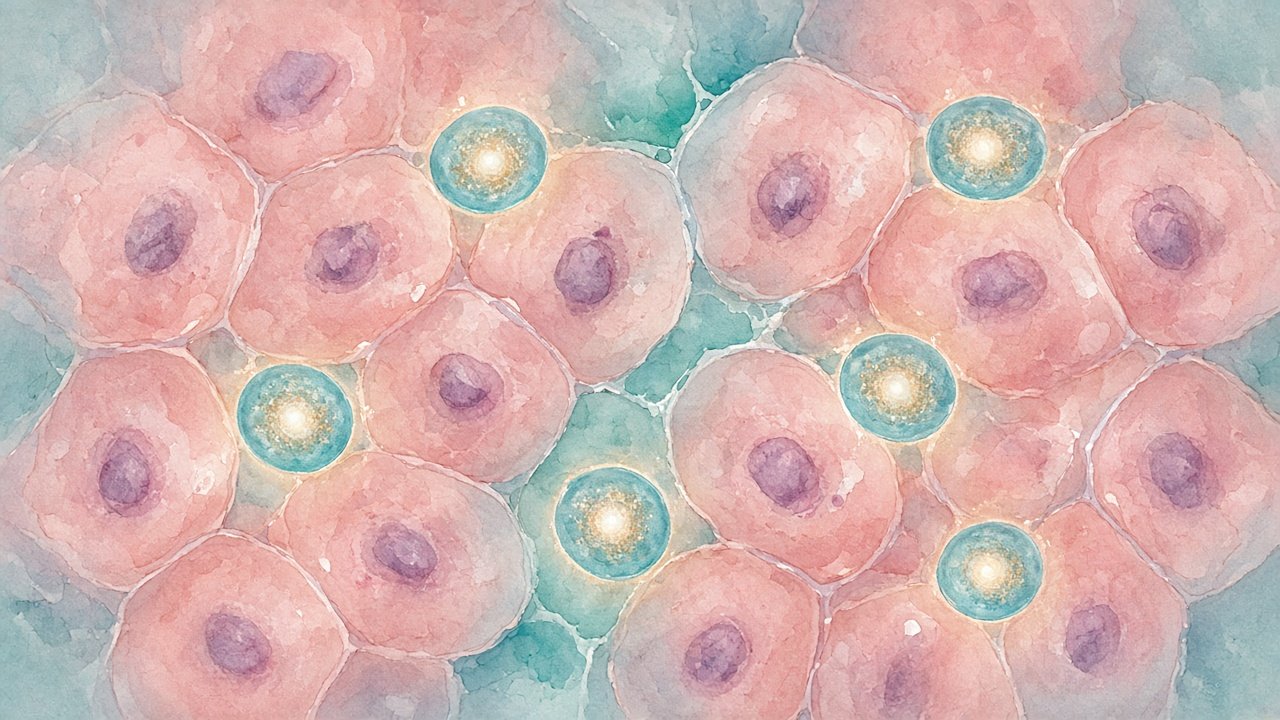
The idea at the center of the conversation is this: research from several labs, including Charlie Swanton's lab in the UK, suggests that if we could biopsy every cell in a healthy person's lungs, we would almost certainly find some cells that already carry cancer-causing mutations. Yet those people don't have cancer. Sid calls these cells "sleeper cells": mutated but dormant.
What wakes them up? Sid describes it as a "gun and trigger" effect, and he points to old and newer animal experiments:
- In the 1950s, Oxford scientists painted a chemical carcinogen on a mouse's back and only a few tumors grew. When they added an inflammatory agent (croton oil), about 80 tumors grew.
- Later, Allan Balmain at UCSF worked with mice that were genetically prone to cancer. Where the mice were wounded and stapled, which caused inflammation, large tumors grew in exactly those spots.
The takeaway: random mutations ("bad luck") still happen, but a particular kind of inflammation may be what turns a dormant mutated cell into an active cancer. Sid adds that "inflammation" is still a loose word, like "energy" before Newton. Something specific about certain inflammatory states matters, and science hasn't yet pinned down what. His view of the bad-luck theory: "Bert is not wrong. He is just early."
Metabolism and "insulin tone"
Obesity is strongly linked to some cancers, especially endometrial cancer, but Sid notes that obesity itself probably doesn't cause mutations. It is a physiological state, and states can wake up sleeper cells. In animal work he published in Nature with Lou Cantley, the key factor appeared to be insulin, not body weight. A chronic, steady background of insulin, which he calls "chronic insulinemic tone," helped cancers grow and resist treatment, and the cancers only became vulnerable once that insulin tone was removed. Attia mentions a related cardiovascular study by Mitch Lazar at Penn, which found that disease tracked with high insulin rather than with body fat. Sid's hypothesis, and he is careful to call it a hypothesis, is that chronic insulin tone may also help keep mutated cells alive and growing, much as inflammation does.
Osteoarthritis: a balance problem, not just a weight problem
Sid's lab discovered the first osteoarthritis-related stem cells (published in Cell, Nature and Nature Medicine). He has never believed osteoarthritis is simply an "obesity disease." Thin people get it too, often in joints that don't bear weight, like the hands, neck and shoulders. And blaming weight alone, he says, felt like blaming the victim, especially women.
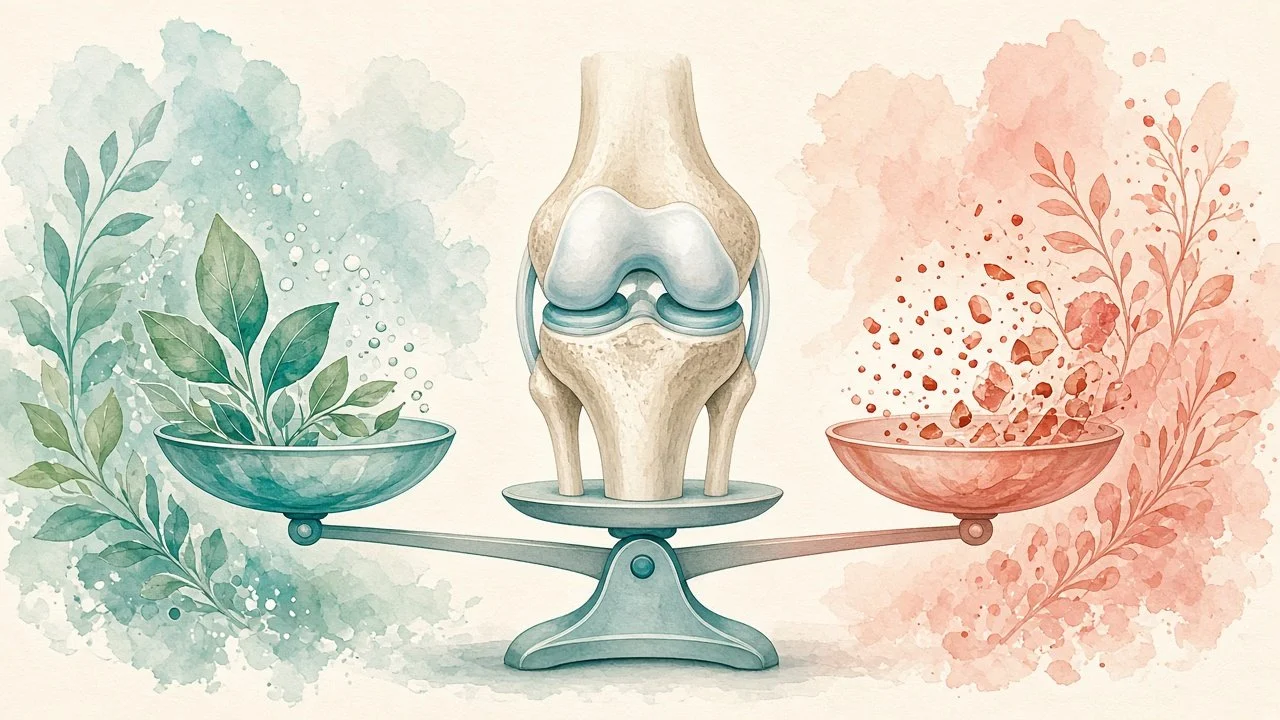
His model is a balance scale. Throughout life, cartilage is constantly being built up and broken down. When those two stay in balance, joints stay healthy. Osteoarthritis develops when cartilage building goes down while cartilage breakdown stays the same or rises. In animal studies, his team has measured a drop in the stem cells that make cartilage. Part of that drop comes from age, since stem cells throughout the body decline over time. But when researchers trigger an immune or inflammatory response in a young, otherwise healthy mouse's joint (for example with a bacterial mimic), the stem cells stop making cartilage and the result closely mimics osteoarthritis. Inflammation also seems to cause stem cells in skin, blood and bone marrow to regenerate less. Sid says he doesn't know why this happens, and stresses that science can answer "how" questions much better than "why" questions.
The same theme runs through cancer and osteoarthritis: inflammation, not just weight or wear and tear, seems to be a key driver.
Why the immune system misses cancer
Checkpoint-inhibitor immunotherapy now helps some patients, including some smokers with lung cancer, which Sid once expected never to see in his lifetime. Attia cites Steve Rosenberg's finding that about 80% of solid tumors carry new markers (neoantigens) that the immune system could in principle recognize. Sid explains that the most important markers may not come from mutations directly. Work from Tyler Jacks' lab at MIT (and, to some extent, Sid's own lab) shows that cancer cells misread their genes and produce "cryptic" protein fragments that shouldn't exist. Cancers then survive by displaying dozens of "don't attack me" flags (checkpoints). Healthy cells use the same flags to avoid autoimmune attack.
The thymus as a possible marker of health
Sid describes a Harvard study that used AI to analyze tens of thousands of CT scans. People who still had an intact thymus, the organ where T cells mature, tended to have less autoimmune disease and less cancer. The thymus naturally shrinks with age. This is a correlation, not proof of cause, but it suggests a possible biomarker and a possible target: could the thymus be kept healthy or restored?
Treatment advances
- CAR-T cells (genetically engineered immune cells) have produced lasting cures in some B-cell leukemias and lymphomas, with some patients alive 15 years after treatment. A subtle point Sid stresses: these cells kill all B cells, not only cancerous ones, and people happen to be able to live without B cells. So CAR-T works by targeting a type of tissue, which makes it promising for tissues people can live without (such as the ovary or fallopian tube, where ovarian cancer actually begins). It's much harder for tissues like the brain.
- New targeted drugs include a drug the auto-transcript spells "Daxon Rasib" (also "Daxsonrasib"), which targets the RAS/KRAS cancer gene. It has extended life for some people with pancreatic cancer, though it has harsh side effects such as facial skin lesions. Sid also mentions Enhertu in breast cancer, several new medicines for myeloma, lymphoma and prostate cancer, and surgery that spares more normal tissue.
- Tumor burden matters. As Vogelstein puts it, there are three zeros between a million and a billion. Shrinking a tumor from a billion cells to a million cuts the odds of a drug-resistant cell by about a thousandfold. That's why testing new drugs after surgery (adjuvant therapy) is so promising. Sid says a trial of the KRAS drug after pancreatic surgery is in the works.
- Metabolic therapy. Cancer cells use energy differently from normal cells, an idea that goes back to Otto Warburg. A company Sid co-founded with Lou Cantley is testing drugs that target cancer metabolism, and the latest public disclosures suggest the approach is working in endometrial and breast cancer. These are early trials.
- AI for drug design. Sid's company, Manifold, teaches AI the rules that chemists use to design drug molecules that fit a target protein, in effect turning one expert chemist into 50,000.
Practical Takeaways
These come straight from the conversation. Some are firm and some, as the speakers say themselves, are speculative. None of this replaces advice from your own doctor.
- Eat more fiber. For lowering colorectal cancer risk, Sid suggests doubling or tripling fiber intake. He cites Dennis Burkitt's observation in Africa decades ago that colorectal cancer was rare where diets were very high in fiber.
- Cut down exposure to "forever chemicals" where you can. Animal studies suggest some of the chemicals people eat in food are strongly pro-inflammatory.
- Eat live yogurt now and then. Sid suggests at least once a week, while saying openly that this rests on "no evidence whatsoever." Probiotics are cheap, and the gut microbiome is being disrupted by antibiotics and modern diets.
- Know your family history and consider genetic testing. Sequencing can now estimate your risk for some cancers (breast and ovarian especially), and higher-risk people may qualify for prevention programs or clinical trials.
- Screen for colorectal cancer on time. The official starting age for colonoscopy has dropped from 50 to 45. Attia argues that people at average risk should start at 40, and earlier with known hereditary risk. That is his opinion, not the formal guideline.
- Be careful with blood tests that claim to catch many cancers early. In the general population they may cause false alarms and extra biopsies without saving lives. They look more useful for high-risk people, such as those with risky gene mutations or a previous cancer.
- Pay attention to metabolic health, not just weight. The conversation points to insulin resistance and inflammation as the possible drivers behind obesity-linked cancers and osteoarthritis.
- Be skeptical of quick fixes. Sid warns that injecting random peptides to slow aging is a mathematical long shot with "basically zero" chance of hitting the right one, and he calls "kitchen sink" approaches like mixing growth hormone with metformin "a mess."
- Prevention still saves the most lives. In Sid's words, the answer "has always been prevention," whether through lifestyle change or, someday, preventive drugs.
Open Questions for Science
- Why is colorectal cancer rising in young people? Sid's guesses are forever chemicals, a disrupted gut microbiome, and low-fiber diets, but he admits he doesn't know.
- Is there a "cholesterol for cancer"? Heart medicine has blood pressure and cholesterol to flag risk early. Cancer has no reliable blood marker yet for a cancer-promoting inflammatory state. Sid believes one will be found.
- What kind of inflammation matters, and how exactly does it wake up sleeper cells?
- Does chronic high insulin drive cancer to start, not just to resist treatment? Sid would like to see a careful animal experiment that exposes animals to long-term high insulin.
- Could GLP-1 drugs help? Both men would like a randomized trial comparing standard cancer care with and without a GLP-1 drug, perhaps in endometrial, ovarian or breast cancer. It would measure whether any benefit comes from lower insulin or from weight loss. As far as Sid knows, no one has formally proposed it.
- Why does inflammation make stem cells, including the ones that make cartilage, stop regenerating? And how can that balance be restored in osteoarthritis?
- Does the thymus cause better health, or just go along with it? Next steps would be transplanting thymus tissue into older animals and searching for the growth factors that keep it from shrinking.
- Can CAR-T work against solid tumors? That depends on finding markers unique to tissues people can live without. A pancreas-specific target hasn't been found yet.
- Will KRAS drugs help after surgery for pancreatic cancer? Trials are said to be in the works.
- Will we have preventive drugs for cancer, the way statins help prevent heart attacks? Sid thinks so, but doubts it will be that simple.
- What causes "regenerative failure" of cartilage, the brain and the immune system? Sid points out that people over 110 tend to die not of cancer but of failing skin, bones, blood and immunity. He calls this a huge new frontier, and says the field first needs a reliable biomarker of aging, a long-term "Manhattan Project" with a strong basic-science core that he believes lies outside the NIH's current mandate.
- How useful can AI "simulated biology" be? Sid is skeptical that cells can be modeled well, because a kidney cell, a neuron and a skin cell work so differently. But he adds, "skeptics are often wrong."