Moving Without Pills: A Guide to Easing Arthritis Discomfort
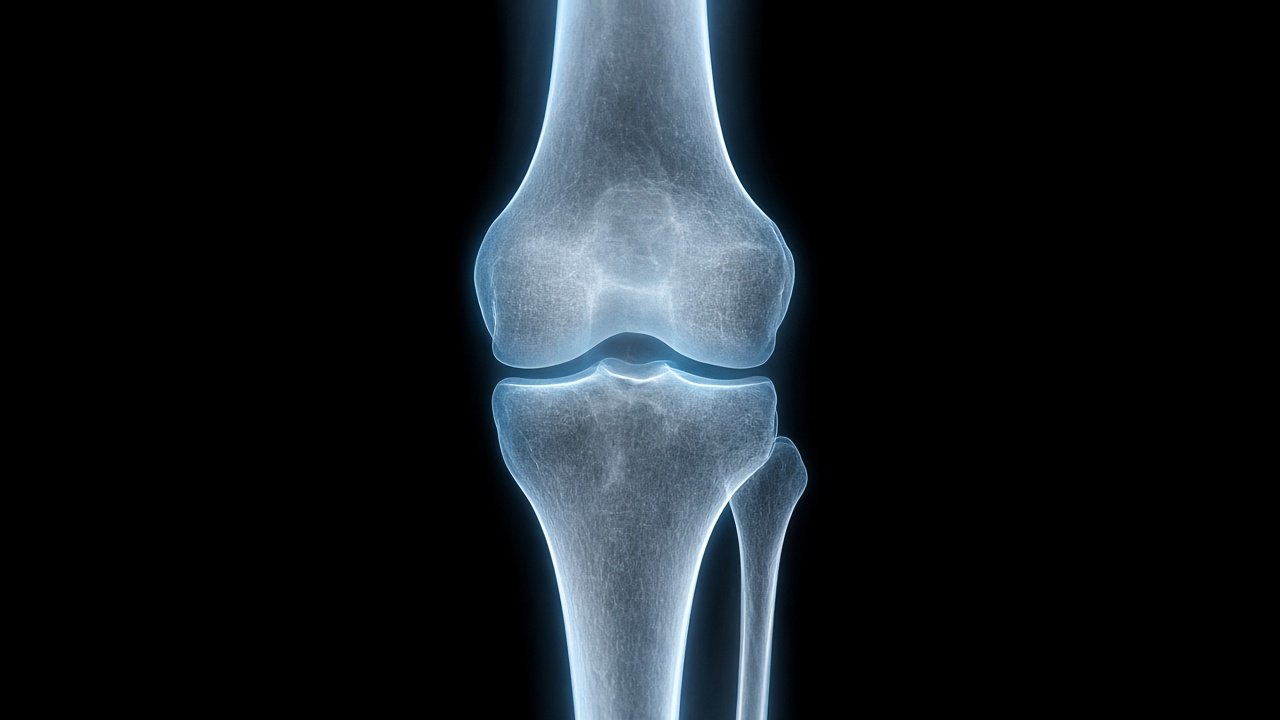
Arthritis is often treated as an inevitable tax of getting older. That story is incomplete. The most common form, osteoarthritis, is not just “worn-out cartilage.” It is a whole-joint problem involving cartilage, bone, ligaments, tendons, muscle, and low-grade inflammation. The good news: several strategies with real scientific support can reduce pain and keep you moving without relying on daily medication.
This article focuses on osteoarthritis (OA), the “wear-and-repair gone wrong” form that hits knees, hips, hands, and spine. Rheumatoid arthritis is a different, autoimmune disease and needs medical care first. Always check with a clinician before starting a new program, especially if a joint is hot, swollen, locked, or recently injured.
The research of Professor Keith Baar at UC Davis sits at the center of a practical shift in thinking: connective tissues respond to short, well-timed loading, not endless grinding, and nutrition can nudge collagen production when you load the tissue at the right moment.
What is actually causing the problem?
Think of a healthy joint as a well-oiled hinge. Smooth cartilage covers the bone ends. Synovial fluid lubricates. Ligaments hold the bones in line. Muscles and tendons absorb shock and keep the joint centered.
In osteoarthritis, that system drifts out of balance:
Cartilage thins and frays. Type II collagen fibers, the “rebar” of cartilage, get thinner and less organized. In later stages, bone can rub on bone.
The joint space narrows. Extra bone (osteophytes, or “spurs”) can form.
The lining of the joint (synovium) can become inflamed.
Muscles around the joint weaken. When the shock absorbers fail, more force lands on cartilage.
After an injury (ACL tear, meniscus tear, fracture), the joint often never loads quite the same way again. That is a major reason OA shows up earlier in people who have had sports or workplace injuries.
It is no longer accurate to call this simple wear and tear. Age, extra body weight, prior injury, weak supporting muscles, genetics, and metabolic inflammation all play a role. Fat tissue itself releases inflammatory signals, which is why extra weight hurts joints even in the hands—not only because of load.
That is why two people with similar X-rays can feel very different amounts of pain. Pain is not only “how much cartilage is left.” It is also how stable the joint is, how strong the muscles are, how inflamed the tissues are, and how the nervous system is interpreting the signals.
What can prevent it—or slow it down
You cannot change your age or your genes. You can change several of the biggest drivers.
Keep extra weight off the joint. For every pound of body weight you lose, the knee sees roughly four pounds less compressive force with each step. A 10–20% weight loss in people with knee OA has been shown to cut pain substantially. Even modest loss helps.
Protect the joint from big injuries—and rehab the ones you get. An ACL or meniscus injury raises the later risk of OA. Getting the muscle and tendon system strong after an injury matters as much as the surgery or brace.
Build and keep the muscles that support the joint. Weak quads are tightly linked to knee OA progression. Strong hips protect both hips and knees. Strong grip and forearm muscles support hand joints. Muscle is the cheapest, most effective brace you will ever own.
Load connective tissue the way it actually adapts. This is where Baar’s work is most useful. Bones, tendons, ligaments, and cartilage get their strongest “get stronger” signal in about 5–10 minutes of loading. After that, extra work adds wear without adding much more of the rebuilding signal. Cells then need several hours (often 6–8) before they respond well again. That is the opposite of “no pain, no gain” for joints.
Stay generally active. Complete rest is not protective. Cartilage and tendon live on intermittent compression and stretch. They get nutrients by being squeezed and then refilled, like a sponge. Sitting all day starves that cycle.
Don’t ignore alignment and daily habits. Repeated deep kneeling, heavy twisting under load, and very high-impact sports without enough recovery all raise risk. You do not have to stop living. You do have to periodize load.
What actually works to ease discomfort (without medication)
Guidelines from groups such as the American College of Rheumatology and OARSI put exercise, education, and weight management at the top—ahead of pills—for most people with OA. That is not a consolation prize. It is the treatment with the best long-term evidence.
1. The right kind of exercise
Three kinds of movement each do a different job.
Strength training around the joint. Stronger quads, glutes, and calves unload the knee. Stronger hip abductors unload the hip. You do not need a gym. Sit-to-stands from a chair, step-ups, bridges, and band work all count. Pain during exercise that settles within a day is usually acceptable; sharp, swelling, or lingering pain is a sign to change the dose, not to quit.
Low-impact aerobic work. Walking, cycling, swimming, and elliptical training improve circulation, mood, sleep, and body weight. They also help the joint fluid stay healthier.
Isometrics—the Baar-aligned tool. An isometric is a hold: the muscle works, the joint angle barely changes. Wall sits, planks, Spanish squat holds, and gentle “push into an immovable object” drills are examples.
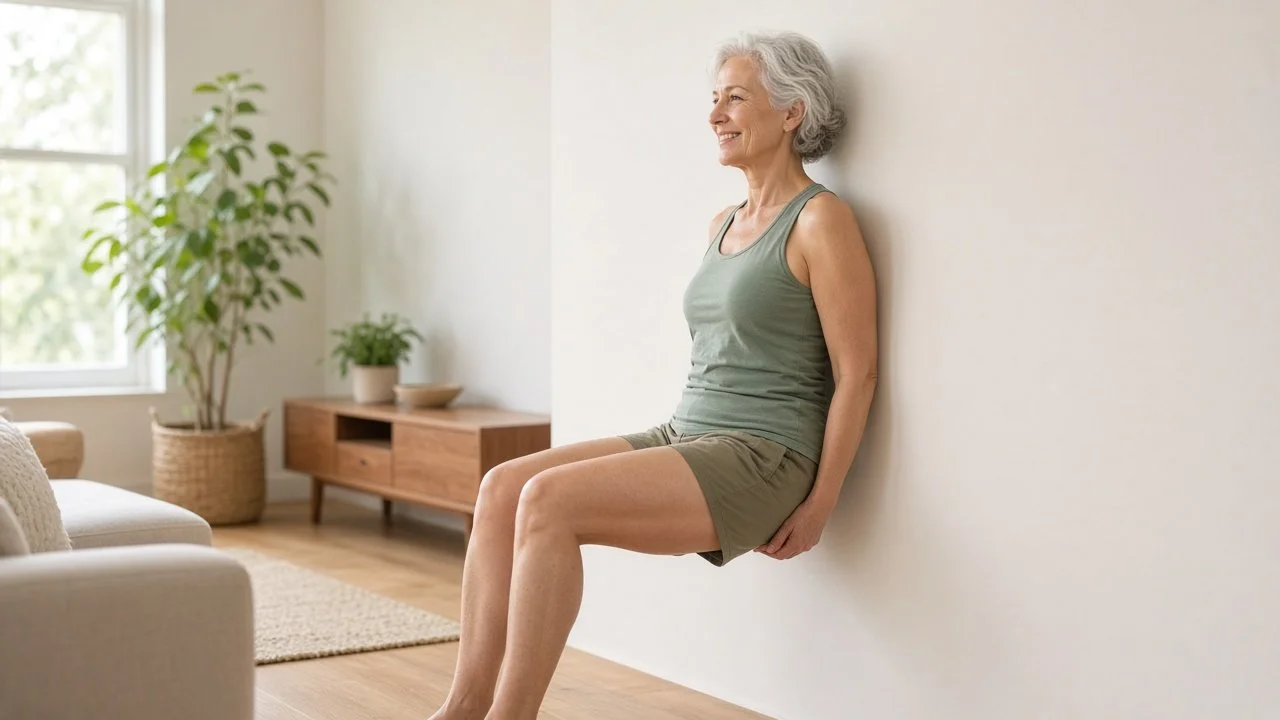
Wall sit can help the knees
Why they help:
They load tendon, ligament, and the tissues around cartilage with very little “jerk” (sudden force spikes that grind tissue).
As you hold, the tendon slowly relaxes (stress relaxation). The muscle has to work harder to keep the position. That is why a wall sit burns even though you are not moving.
Short holds (often 10–30 seconds, built up over weeks) can send a repair signal without the wear of hundreds of bouncing reps.
In people with knee OA, isometric quad work has been shown to reduce pain and, in some studies, even change joint-fluid chemistry in a healthier direction. One trial found isometric training increased patellar cartilage volume; that is not a cure, but it is a signal that the tissue is not doomed to only shrink.
Baar’s lab work with engineered ligaments is blunt: connective tissue cells stop listening after about ten minutes. Two short sessions (morning and evening) can beat one long grind. For a painful joint, think brief, controlled, repeatable—not heroic.
A simple knee example:
30–60 minutes after a collagen + vitamin C drink (see below), do 4 holds of a wall sit or a high Spanish squat.
Start at a height that is only mildly uncomfortable.
Hold 10–20 seconds, rest 1–2 minutes, repeat.
Total loading time stays under about 10 minutes.
Repeat later in the day if the joint feels good, with several hours between sessions.
Hands, shoulders, and elbows can use the same idea: a gentle isometric squeeze or hold in a pain-tolerable position, not a marathon of gripping.
Mind-body movement. Tai chi has strong guideline support for knee and hip OA. It trains balance, strength, and confidence without pounding the joint. Yoga is conditionally recommended for some people. Both work partly because they get you moving consistently.
2. Targeted nutrition: collagen plus vitamin C, timed with load
This is the piece most people get wrong. They take collagen at random times and expect magic.
Collagen is the main structural protein in cartilage, tendon, and ligament. Vitamin C is not optional garnish. It is a required cofactor for the enzyme that lets a cell finish and export collagen into the tissue. Without enough vitamin C at the right moment, the factory makes a product that never leaves the building.
Baar’s human work (with colleagues including Greg Shaw) found that about 15 grams of gelatin, taken with vitamin C roughly an hour before a short bout of loading, roughly doubled a blood marker of new collagen formation compared with placebo. Hydrolyzed collagen peptides work similarly. Typical practical range used in this research tradition:
10–15 grams hydrolyzed collagen or gelatin
50–250 mg vitamin C (food or a small supplement)
30–60 minutes before the isometric or loading session
Why before, not after? Cartilage and tendon have poor blood supply. They take in nutrients when they are compressed and then re-expand, sucking fluid in. If the amino acids and vitamin C are already in the bloodstream when you load, more of them get pulled into the tissue you just used.
Baar has also said collagen is most likely to help when demand is high—after injury, or in osteoarthritis, where collagen turnover is disturbed—not as a daily luxury for every healthy person. Meta-analyses of collagen supplements in OA show small-to-moderate reductions in pain and improvements in function. The effect is real for many people, not miraculous, and it works best as an add-on to loading, not a replacement for it.
You can get collagen from food (slow-cooked connective tissue, skin-on fish, bone-in cuts). The supplement is just an easy, timed dose. A glass of orange juice or a kiwi with the collagen covers the vitamin C for most people.
Baar is careful on one point: loading is about 95% of the stimulus. Nutrition is the extra few percent. Do not skip the holds and expect powder to rebuild a knee.
3. Other non-drug tools that earn their place
Heat before movement to loosen a stiff joint; cold after a flare if it calms swelling. Neither is a treatment by itself.
Braces, canes, and footwear. A cane in the opposite hand unloads a painful hip or knee. A simple knee sleeve can improve confidence and proprioception.
Sleep and stress. Pain sensitivity rises when you are exhausted or chronically stressed. That is biology, not weakness.
Activity pacing. Break tasks up. Sitting all morning then gardening for three hours is how flares start.
What to be cautious with. High-dose, frequent NSAIDs and aggressive icing are not “free.” Baar and others have argued that blotting out all inflammation can also blunt the remodeling signal connective tissue needs. Occasional use for a bad day is different from living on anti-inflammatories.
Glucosamine and chondroitin remain popular. Large reviews have not shown consistent, clinically meaningful benefit for most people with knee or hip OA, which is why several major guidelines no longer recommend them as first-line.
Professor Keith Baar, in plain language
Keith Baar is a molecular exercise physiologist at UC Davis. His lab grows ligaments in dishes, studies animals, and tests ideas in athletes and patients. The through-line of his work:
Muscle, tendon, and ligament are living tissues. They remodel when you load them.
The “listen” window is short. After about 10 minutes, more of the same movement mostly adds wear.
Rest of 6–8 hours lets the cells become responsive again. Two short sessions can beat one long one.
Slow isometrics are a way to send the rebuild signal with less jerk.
Collagen amino acids plus vitamin C, taken before loading, can increase the raw material available while the tissue is drinking it in.
Immobilization is expensive. Tendon collagen content can drop fast when you stop loading; rebuilding takes much longer.
He has used this approach in elite sport and in rehab settings (including a published case of a professional basketball player whose patellar tendinopathy improved on MRI after isometric loading plus gelatin and vitamin C). He has also noted that collagen supplementation appears helpful for knee OA symptoms in longer studies.
His healthspan shorthand is simple: get out of breath with real effort a few times a week, and use short isometric holds to load the joints that hurt.
A one-week starter plan
This is a template, not a prescription.
Daily
Walk or cycle at an easy-to-moderate pace most days.
If you use collagen: 10–15 g collagen or gelatin + vitamin C, 30–60 minutes before your loading session.
Most days (10 minutes, twice if tolerated)
One isometric for the painful joint.
Knees: wall sit or high sit-to-hold.
Hips: standing isometric squeeze into a wall or pillow between the knees.
Hands: gentle putty or towel squeeze hold.
4 rounds of 10–30 second holds, with rest between. Stay under ~10 minutes of actual loading.
2–3 days a week
Strength: sit-to-stands, hip bridges, step-ups or mini-squats in a comfortable range, calf raises. 2–3 sets.
Optional tai chi or a mobility flow.
Weekly
One longer pleasant activity you enjoy (swim, hike on even ground, dance in the kitchen).
If you carry extra weight, a small, sustainable calorie deficit beats a crash diet.
Progress is measured in function: stairs, sleep, walking distance, morning stiffness—not in a perfect X-ray.
Summary
Osteoarthritis is a whole-joint disease: cartilage frays, bone remodels, muscles weaken, and low-grade inflammation keeps the cycle going. Age and genes matter. So do weight, old injuries, and how you load the joint every day.
Prevention and relief without medication rest on four pillars:
Unload extra body weight where you can.
Strengthen the muscles that stabilize the joint.
Load connective tissue in short bouts—isometrics and brief, controlled work—then rest those tissues for hours so they can respond again. That is the core lesson from Keith Baar’s UC Davis research.
Time collagen and vitamin C before that loading if you want a nutritional assist. It is an adjunct, not a cure.
Exercise is not a punishment for having arthritis. It is the signal that tells cartilage, tendon, and muscle they are still needed. The dose that works is usually smaller, slower, and more frequent than people expect—and far more powerful than waiting for a pill to make the joint young again.
This article is educational, not medical advice. Get a diagnosis, rule out inflammatory arthritis or other causes of joint pain, and work with a physical therapist if a joint is unstable or severely limited.