What two major studies suggest about muscle, bone, and lifting in midlife.
This post draws on two carefully done studies. The first is the LIFTMOR trial by Watson and colleagues, published in 2018 in the Journal of Bone and Mineral Research. The second is a long-term look at body composition from the Study of Women's Health Across the Nation, or SWAN, by Greendale and colleagues, published in 2019 in JCI Insight.
Why This Is Important
If your clothes have started to fit differently in midlife, or you feel a little less steady on the stairs, you are not imagining it. And it is not a character flaw.
A large, long-term study of women moving through menopause found that the body can change during that transition in a quiet way. Fat gain may speed up, and lean mass, which includes muscle, can start to decline. The number on the scale may barely budge, because those two shifts can offset each other.
The encouraging part is that this is not a story you can only watch. In a well-known trial, postmenopausal women with low bone mass did two short, supervised strength sessions a week. After eight months, their spine bone density went up, on average, while a group doing lighter exercise at home lost a little. Strength work, done safely, may be one of the most useful tools we have in this chapter of life.
10 Things Worth Knowing
1. The scale can hide a real shift.
In the SWAN study, women were followed for years as they moved through menopause. During the transition, the rate of fat gain nearly doubled, and lean mass, which had been rising a little, began to decline. Body weight often did not speed up at the same time, because a gain in fat and a loss of lean mass can cancel each other out on the scale. If your weight looks "the same" but your clothes feel tighter, or you feel less strong, that pattern may help explain it.
2. The change often speeds up around the menopause transition.
The researchers found that this shift was associated with the menopause transition itself, not just with getting older. In their analysis, the faster fat gain and the lean-mass decline tended to start around two years before the final menstrual period and continue until about two years after it. That window is what many of us call perimenopause and the early years after the last period.
3. Then the pace often levels off.
Here is a hopeful detail that gets less attention. After that window, the SWAN researchers found that fat and lean mass tended to level off. Midlife is a season of change, and it is also a season when support, especially strength work, can matter a lot.
4. Lean mass is about more than how you look.
Muscle helps you get up from the floor, carry groceries, hike, and catch your balance. It also supports your joints and your metabolism. When lean mass declines, everyday life can start to feel harder, even if you have not changed your routine. This is one reason I care so much about strength in midlife, including in my Joyful Joints work: strong muscles can make movement feel better, not just look different.
5. Bone can change in this chapter too.
Estrogen helps keep the usual give-and-take of bone breakdown and bone building in better balance. As estrogen falls during the menopause transition, bone loss can speed up for a time. That does not mean every woman will develop osteoporosis. It does mean that midlife is a meaningful window to give your bones a reason to stay strong.
6. A lifting trial had a result many people find surprising.
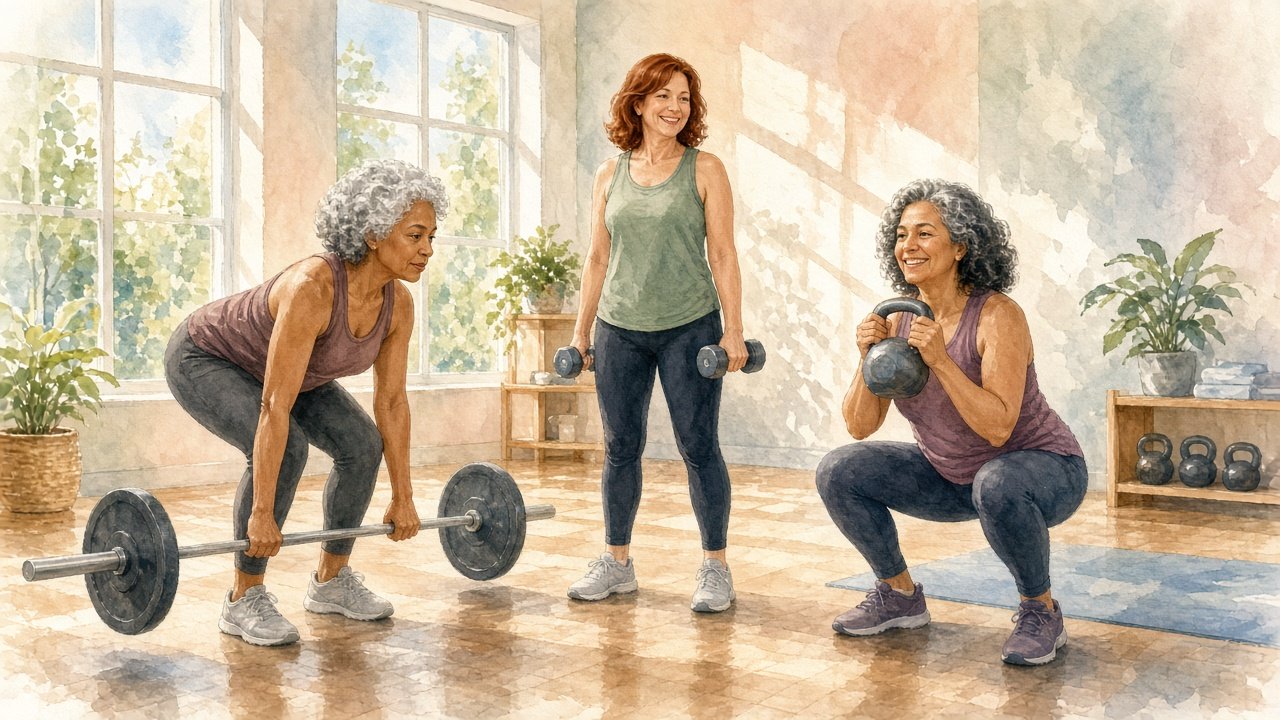
The LIFTMOR trial followed postmenopausal women with low bone mass for eight months. One group did two supervised, 30-minute sessions a week of high-intensity resistance and impact training. After eight months, their lower-spine bone density rose by about 2.9%, on average. The group that did a lighter, home-based exercise program lost about 1.2%. The lifting group also did better at the hip. Brief, hard, well-supervised strength work was associated with a gain, while lighter exercise was not enough to prevent a loss in that study.
7. The sessions were short, and they started gradually.
This was not hours in the gym, just two 30-minute sessions a week. The program used familiar strength moves, including squats, deadlifts, and overhead presses, plus a jumping and landing drill. The first month was lighter, so the women could learn the movements well before the loads got heavy. That slow start is worth copying. Form first, then load, is a safer way in.
8. "Taking it easy" may not protect bone the way we hope.
It is tempting to think gentle exercise is the careful choice, especially if you already have low bone mass. In LIFTMOR, though, many women in the lighter home program lost some spine bone density over the eight months. This does not mean walking, yoga, or easy movement are pointless. They can support mood, balance, and overall health. It does suggest that bones may need a stronger signal than we once assumed, and that signal often comes from lifting and impact, when it is done safely.
9. The heavy lifting was closely supervised, and that matters.
This is the safety note I want to underline. The LIFTMOR sessions were run in small groups, with a trained professional watching. The women were screened first. Under those conditions, the program appeared to be well tolerated, with only one minor back spasm reported. That is not permission to walk into a gym and start heavy lifts on your own, especially if you have low bone mass, joint pain, or are new to lifting. If you want to train in this territory, start with a qualified coach who knows midlife women and bone health. Talk with your clinician if you have osteoporosis, a history of fracture, or other medical concerns.
10. You can get stronger in midlife, starting where you are.
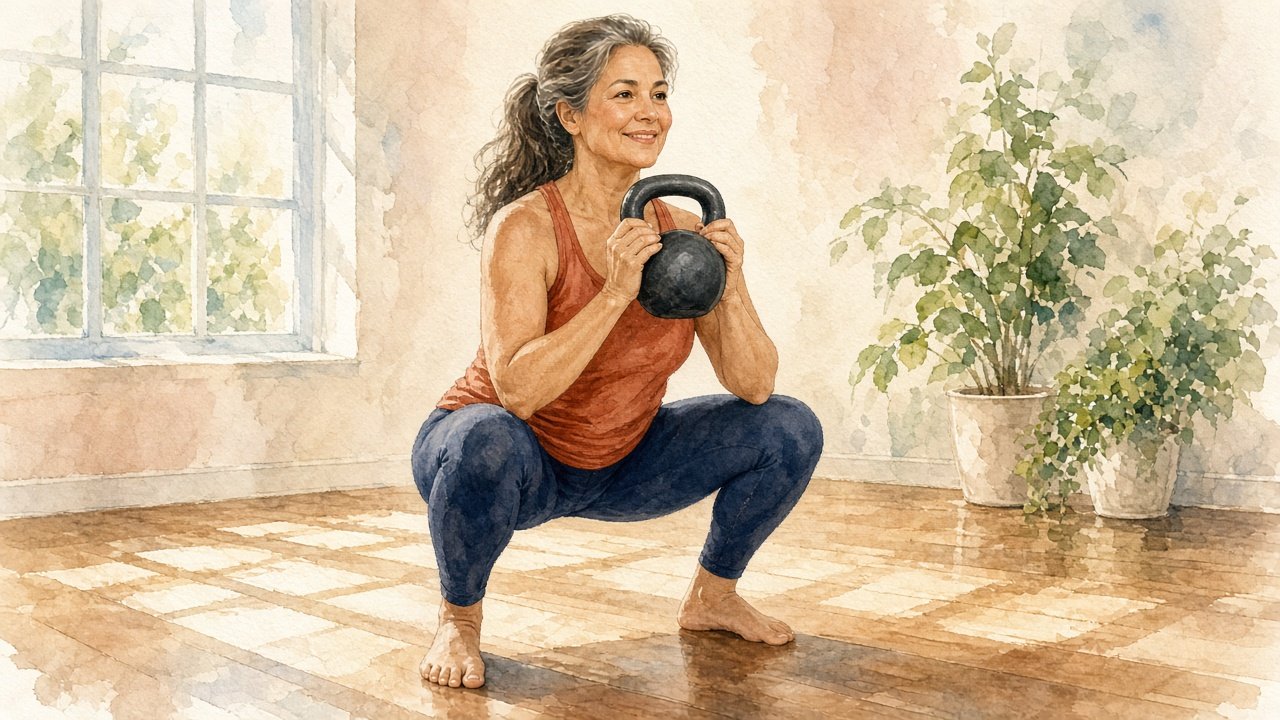
You do not have to copy a research protocol to benefit from strength work. Sit-to-stands from a chair, carrying groceries in both arms, a goblet squat with a light weight, or a simple deadlift pattern with a coach can all be a start. Consistency matters more than heroics. Enough protein, regular lifting, and patience can help you keep the muscle and bone you have, and may help you build some back. If you would like company along the way, I offer Joyful Joints and strength coaching for midlife women. We can begin at your level and progress with care.
5 Key Takeaways
During the menopause transition, fat gain can speed up and lean mass can decline, even when the scale barely moves.
In the SWAN study, those body-composition changes often leveled off after menopause, rather than continuing at the same faster pace.
In the LIFTMOR trial, two supervised 30-minute high-intensity lifting sessions a week were associated with about a 2.9% gain in spine bone density over eight months, while a lighter home-exercise group lost about 1.2%.
The heavy program in that study was carefully supervised. If you want to lift heavier, start with a qualified coach and get medical guidance when you need it.
Midlife is a powerful time to train for strength, not a time to shrink from it. Muscle and bone still respond.

Try This This Week
Two or three days this week, practice a slow sit-to-stand from a sturdy chair. Use your legs, not momentum, and stand all the way tall.
Carry your groceries, a laundry basket, or a grandchild (if that's part of your life) with a little more attention to a strong, tall posture.
Add a palm-sized portion of protein to each meal, such as eggs, fish, yogurt, beans, tofu, or chicken.
If you already lift, keep your two sessions this week, and notice how you feel on the stairs and on a walk.
If you are new to strength work, consider one session with a qualified coach who can watch your form. You do not have to start heavy.
This post is for general education and is not personal medical advice. If you have low bone mass, joint pain, a history of fracture, or questions about starting a strength program, talk with your clinician before you change your exercise.